
What Is XOS (Xylooligosaccharide)?
Xylooligosaccharides, abbreviated as XOS, are functional oligosaccharides composed of xylose monosaccharide units linked by β-1,4 glycosidic bonds. The degree of polymerization (DP) for commercially available XOS falls between 2 and 7, meaning each molecule contains two to seven xylose residues arranged along a xylan backbone. This short-chain structure is what gives XOS its functional identity as a prebiotic fiber.
XOS belongs to the class of non-digestible oligosaccharides (NDOs). The human digestive system does not produce enzymes capable of cleaving the β-1,4 bonds between xylose units. As a consequence, XOS passes through the stomach and small intestine without being absorbed, arriving intact in the colon where it serves as a selective substrate for beneficial bacteria — predominantly Bifidobacterium species. The selective fermentation of XOS by bifidobacteria produces short-chain fatty acids (SCFAs), including acetate, propionate, and butyrate, which support colonocyte health and contribute to metabolic function.
One of the defining characteristics of XOS is its potency. Clinical studies demonstrate a measurable bifidogenic effect at doses as low as 1 to 2 grams per day. For reference, fructooligosaccharides (FOS) and galactooligosaccharides (GOS) typically require 5 to 10 grams daily to produce comparable shifts in gut microbiota composition. This dose efficiency means that XOS can provide meaningful prebiotic activity at a fraction of the intake level required by other oligosaccharides, reducing the risk of digestive discomfort that sometimes accompanies higher fiber doses.
XOS is virtually free of sweetness. This is a critical functional distinction from FOS and isomaltooligosaccharides (IMO), both of which contribute noticeable sweetness to finished products. The neutral taste profile of XOS makes it compatible with savory formulations, high-protein products, meal replacements, and any application where added sweetness would interfere with the intended flavor profile.
From a nutritional perspective, XOS contributes negligible calories. While the SCFAs produced during colonic fermentation do provide some metabolic energy, the net caloric contribution is recognized by most regulatory authorities as approximately 0 to 2 kilocalories per gram.
XOS Powder vs XOS Syrup
Commercial organic XOS is supplied in two primary physical forms: powder and syrup. Each form presents distinct handling characteristics, purity levels, and application suitability.
| Feature | XOS Powder | XOS Syrup |
|---|---|---|
| Purity (XOS on dry basis) | 95% minimum | 70-75% dry matter |
| Physical appearance | White to off-white free-flowing powder | Amber to light brown viscous liquid |
| Water solubility | Highly soluble; dissolves readily in cold water | Already in solution; fully miscible |
| Handling requirements | Hygroscopic; needs sealed moisture-barrier packaging; dust control needed | Pumpable; pour-and-measure; no dust concerns |
| Shelf life (unopened) | 24+ months under recommended storage | 12-18 months; may darken gradually with age |
| Typical applications | Capsules, tablets, stick packs, dry beverage mixes, powdered supplements | Liquid supplements, functional beverages, syrups, sauces, liquid meal replacements |
| Transportation efficiency | Lower weight per unit of XOS; compact storage | Higher weight due to water content; larger storage volume per unit of XOS |
| Dosing precision | Gravimetric dosing; highly accurate | Volumetric dosing possible; influenced by temperature and viscosity |
| Microbial stability | Low water activity naturally controls microbial growth | Sealed containers stable; once opened, refrigeration recommended |
| Blending behavior | Excellent in dry blends; may require pre-dispersion in high-fat matrices | Fully integrates into aqueous systems; no dissolution step required |
XOS powder is manufactured by spray-drying a purified and concentrated XOS hydrolysate. The resulting powder is hygroscopic and must be stored in sealed, moisture-impermeable packaging to prevent clumping and quality loss. When stored correctly, powder-grade XOS provides the highest available purity and offers maximum flexibility for solid oral dosage forms.
XOS syrup retains roughly 25 to 30 percent water content. While this reduces purity on an as-is weight basis, syrup offers clear operational advantages for liquid manufacturing. It integrates directly into batch processes without a dissolution step and eliminates dust exposure in the production environment. Syrup handling equipment is simple — pumps, meters, and transfer lines — making it a practical choice for high-volume liquid production.
How Is XOS Made?
XOS is produced through enzymatic hydrolysis of xylan, a hemicellulose polysaccharide that occurs in the cell walls of numerous agricultural byproducts. The process is fundamentally biological and avoids harsh chemical synthesis, which enables organic-certified production pathways.
The primary raw material sources for XOS are xylan-rich agricultural residues:
- Corn cobs — the predominant commercial source, containing 30 to 35 percent xylan by dry weight and offering reliable year-round availability
- Sugarcane bagasse — the fibrous residue remaining after sugar extraction, abundant in tropical sugar-producing regions
- Bamboo shoots — young bamboo provides xylan fractions that are relatively accessible to enzymatic attack
- Birch wood — a traditional feedstock in Northern European production, valued for its clean xylan profile
The production sequence involves several integrated stages.
Pretreatment. The raw agricultural material undergoes conditioning to increase xylan accessibility. Common pretreatment methods include mild alkaline treatment or steam explosion, which disrupt the lignocellulosic matrix and expose xylan chains for subsequent extraction while preserving the β-1,4 backbone structure.
Xylan extraction. The pretreated biomass is subjected to aqueous or alkaline extraction, which solubilizes xylan and separates it from cellulose and lignin fractions. The resulting xylan-rich extract forms the substrate for enzymatic hydrolysis.
Enzymatic hydrolysis. The extracted xylan is treated with endo-1,4-β-xylanase enzymes that cleave the xylan backbone at internal β-1,4 linkages. This produces a mixture of xylooligosaccharides with DP values concentrated in the 2 to 7 range. Enzyme specificity, temperature, pH, and hydrolysis duration are controlled to determine the final XOS profile and average molecular weight distribution.
Purification. The hydrolysate undergoes sequential purification. Membrane filtration removes residual high-molecular-weight xylan and spent enzymes. Activated carbon treatment strips color bodies and off-flavors. Ion exchange chromatography eliminates mineral salts, monosaccharides such as xylose and arabinose, and other low-molecular-weight impurities that would otherwise reduce prebiotic selectivity.
Finishing. The purified XOS solution is concentrated under vacuum and either spray-dried to produce a free-flowing powder or adjusted to the target dry matter content for syrup. Final product testing verifies XOS content, DP distribution, moisture, ash, heavy metals, and microbial limits against specification.
For organic certification, the raw material must originate from certified organic sources, and only approved processing aids and enzymes may be used throughout production. The enzymatic nature of the process — as opposed to acid hydrolysis — aligns naturally with organic processing standards, as it avoids the use of synthetic chemical catalysts.
Common Names and Aliases
XOS appears under several names in scientific literature, supplier documentation, and ingredient labels. Recognizing these naming conventions helps avoid errors during sourcing and specification.
The systematic name is xylooligosaccharides, and the universal abbreviation is XOS. On product labels, ingredient declarations commonly use:
- Xylooligosaccharide or xylo-oligosaccharide (hyphenated form, encountered in older literature)
- XOS-95P or XOS-70S (commercial grade codes indicating purity and form: 95 percent powder, 70 percent syrup)
- Corn cob oligosaccharides (source-specific designation)
- Bamboo xylan oligosaccharides (when bamboo is the raw material)
- Prebiotic xylan hydrolysate (functional-descriptive naming)
- Xylo-oligo (abbreviated form common in Asian markets)
The CAS registry number for the xylose monomer alone is 87-99-0, but XOS as a mixed oligosaccharide does not carry a single CAS number — it is defined by specification rather than by a discrete molecular entity. When evaluating supplier documentation, the parameters that matter most include total XOS content on a dry basis, residual monosaccharide content (xylose and arabinose should each remain below 5 percent), the DP distribution profile, ash and moisture levels, and microbial safety data.
How XOS Differs From Other Oligosaccharides
The oligosaccharide category groups several structurally and functionally distinct molecules. Comparing XOS with the other widely used prebiotic oligosaccharides — FOS, GOS, and IMO — reveals practical differences that inform product development decisions.
| Property | XOS | FOS | GOS | IMO |
|---|---|---|---|---|
| Monomer unit | Xylose (pentose, C5) | Fructose + glucose (hexose, C6) | Galactose + glucose (hexose, C6) | Glucose (hexose, C6) |
| Glycosidic bond type | β-1,4 | β-2,1 | β-1,4 and β-1,6 | α-1,6 (primarily) |
| Typical DP range | 2-7 | 2-10 | 2-8 | 2-7 |
| Primary source material | Corn cobs, bamboo, bagasse | Chicory root, Jerusalem artichoke | Bovine milk (lactose) | Starch (tapioca, corn) |
| Effective prebiotic dose | 1-2 g/day | 5-10 g/day | 5-10 g/day | 5-15 g/day |
| Sweetness (relative to sucrose) | Near zero | 30-50% | 20-40% | 40-60% |
| Acid stability | Excellent (pH 2.5-8) | Poor (degrades below pH 4.0) | Moderate (degrades below pH 3.5) | Good (pH 3.0-7.0) |
| Heat stability | Up to 120°C | Degrades above 80°C | Degrades above 100°C | Up to 120°C |
| Caloric value (kcal/g) | ~0-2 | ~1.5-2 | ~1.5-2 | ~2-3 |
| Digestive fate | Fully non-digestible | Fully non-digestible | Fully non-digestible | Partially digestible |
The structural distinction between XOS and the other oligosaccharides originates at the monomer level. XOS is built from xylose, a five-carbon pentose sugar, whereas FOS, GOS, and IMO are all constructed from six-carbon hexose sugars. This C5 backbone makes XOS unrecognizable to virtually all carbohydrate-digesting enzymes in the human gut, which are optimized for hexose substrates. The result is complete resistance to upper-gastrointestinal digestion — a property shared with FOS and GOS but not with IMO, which is partially hydrolyzed by intestinal α-glucosidases.
The acid stability differential carries direct consequences for product formulation. FOS undergoes substantial degradation in acidic environments (pH below 4.0), losing prebiotic functionality while releasing free fructose and glucose that increase sweetness and caloric load. XOS remains intact at pH values as low as 2.5, making it suitable for fruit juices, vitamin waters, carbonated beverages, fermented dairy drinks, and acidified nutritional products — all without protective encapsulation or overage calculations.
IMO’s partial digestibility represents a further differentiator. Because intestinal α-glucosidases can cleave a portion of IMO’s α-1,6 bonds, some fraction of ingested IMO is absorbed in the small intestine as glucose, contributing to caloric intake and glycemic response before any material reaches the colon. The fraction that does arrive in the colon must be dosed at 5 to 15 grams daily for a consistent prebiotic effect, compared with 1 to 2 grams for XOS.
How to Choose the Right Organic XOS
Selecting the appropriate XOS grade for a given application requires evaluation across several dimensions: purity, form, certification, source, and supplier capability.
Purity establishes the baseline. For supplements and functional foods where label claims matter, a minimum XOS content of 95 percent on a dry basis (XOS-95 grade) is recommended. Lower-purity products may carry residual monosaccharides that introduce unintended sweetness, or higher-DP xylan fragments with limited prebiotic activity. When syrup is the chosen form, evaluate XOS content on a dry matter basis — not the as-is concentration — to make a meaningful comparison with powder grades.
Physical form follows from the manufacturing process. Powder is the standard for capsules, tablets, stick packs, and dry beverage mixes. It maximizes purity per unit weight and simplifies logistics. Syrup makes sense for liquid manufacturing lines — it bypasses the dissolution step entirely and flows directly into batch tanks. The trade-off is that syrup occupies more storage volume and has a shorter shelf life than dry powder.
Certification status should match the regulatory and marketing requirements of the target geography. USDA NOP organic certification, EU Organic equivalence, Non-GMO Project verification, Kosher, and Halal certifications may each be relevant depending on the end product and distribution markets. Confirm that certifications are issued by recognized accrediting bodies and cover the specific production facility from which material will be supplied.
Raw material origin can influence marketing positioning. Corn cob-derived XOS is the most widely available and generally the most economical. Bamboo-derived XOS may support a stronger sustainability or plant-forward narrative in certain markets. Sugarcane-derived XOS works well in regions where corn allergen labeling is a concern, though corn-based XOS is widely accepted as allergen-free because the protein fraction is removed during processing.
Supplier technical capability extends beyond product quality. A supplier that provides detailed specification sheets, certificates of analysis by lot, DP distribution data, stability study results, and application formulation guidance brings practical value to the development process. Support for challenging matrices — high-acid systems, high-temperature processing, extended shelf-life products — can shorten development timelines and reduce reformulation risk.
Application testing remains the final verification. Request samples and evaluate XOS behavior in the actual product matrix: dispersibility, clarity in solution, pH stability over the intended shelf life, and sensory neutrality. Performance in a dry blend does not necessarily predict performance in an acidic ready-to-drink product. Confirming compatibility at bench scale before committing to commercial volumes is standard and prudent practice.
About Our Organic XOS
Our organic xylooligosaccharides are produced from certified organic corn cobs using a pure enzymatic hydrolysis process, yielding a high-purity prebiotic fiber with 95 percent minimum XOS content in powder form and 70 percent dry matter in syrup form. Both formats carry organic certification, Non-GMO Project verification, Kosher and Halal certification, and full batch-level traceability. Technical specification sheets and application samples are available on request.
Recommended Products
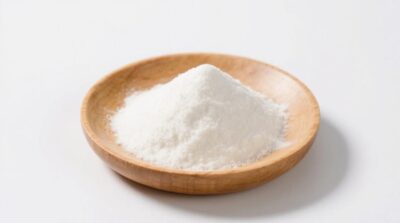
Xylooligosaccharides
Xylooligosaccharides (XOS) is a prebiotic fiber from non-GMO corncob, effective at low dosage. Heat…
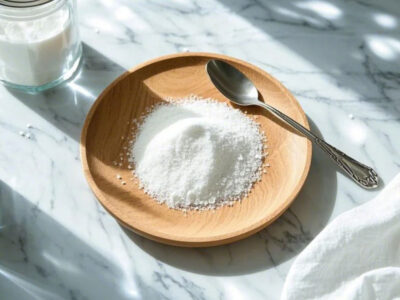
Galactooligosaccharides Powder
Galactooligosaccharides (GOS) is a prebiotic from lactose that selectively feeds bifidobacteria. Heat and acid…
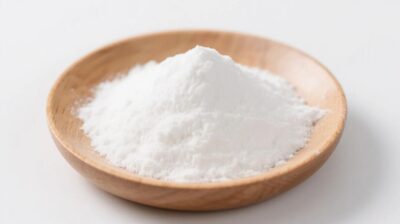
Fructooligosaccharides
Fructooligosaccharides (FOS) is a prebiotic fiber at 95% purity from non-GMO sugarcane or chicory.…
Related Posts


