
Ever wonder what makes a sauce perfectly smooth or a fried dish impossibly crispy? The answer might be a simple, humble box of organic cornstarch powder hiding in your pantry. Often seen as a one-trick pony for thickening gravies, this versatile ingredient is the secret weapon of professional chefs and savvy home cooks alike.
Cornstarch is the starch milled from the endosperm of the corn kernel, and it behaves nothing like corn flour. It is roughly three quarters amylopectin and one quarter amylose, it contains no gluten, and it has a neutral taste, which is why it can thicken a cherry pie and a cheese sauce without leaving a signature of its own.
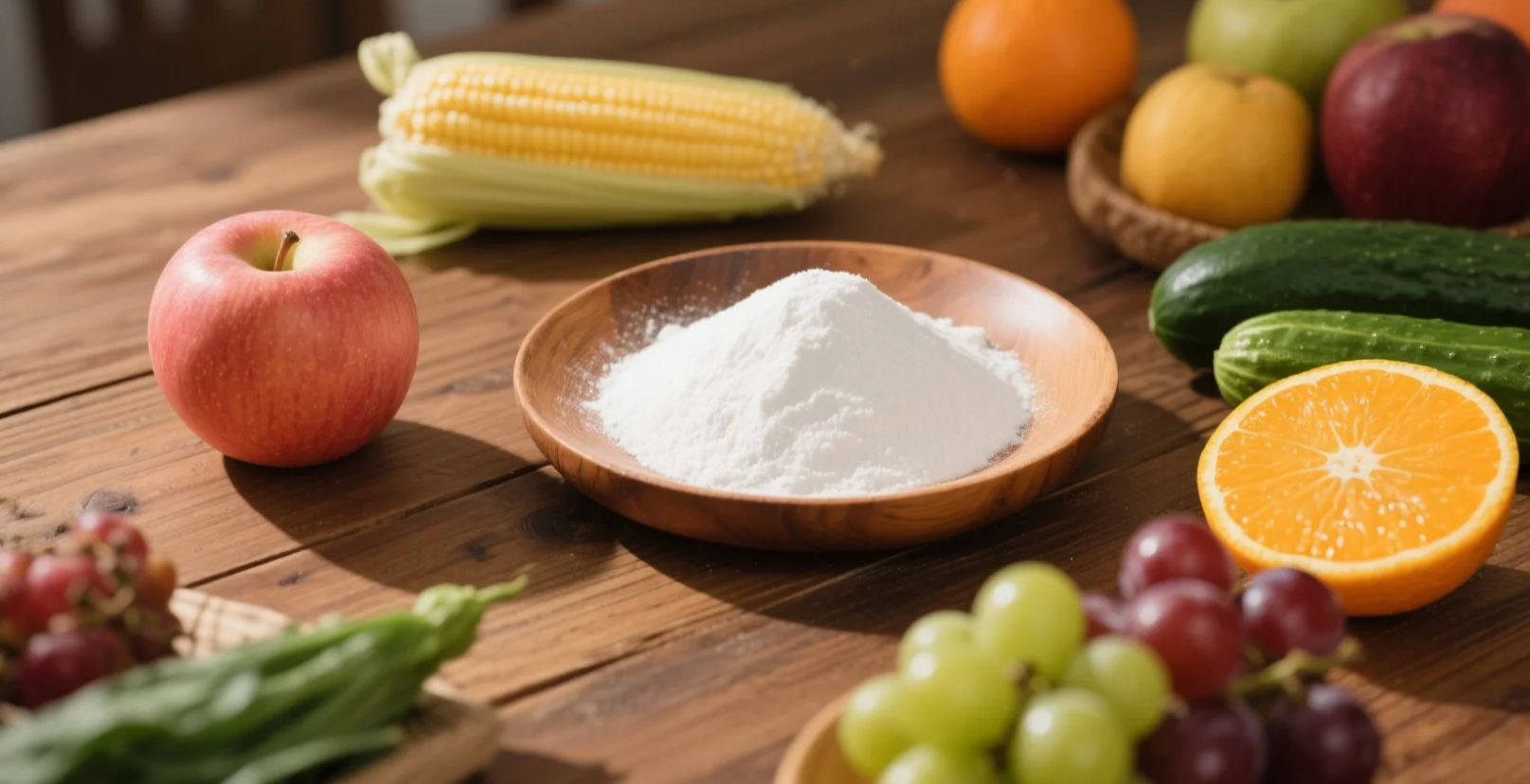
Beyond the Basics: More Than Just a Thickener
While it’s a champion at creating silky, lump-free sauces and puddings, organic cornstarch’s talents extend far beyond. Use a small amount to coat chicken or tofu before frying, and you’ll get a golden, crunchy crust that locks in moisture without being heavy. For gluten-free baking, it’s a lifesaver, helping to create a tender, light texture in cakes and cookies.
The coating trick works for a structural reason. Cornstarch gelatinizes and then, in hot oil, dehydrates into a thin, brittle shell that holds moisture inside the food. Rice flour and wheat flour both brown faster and absorb more oil, so a light dusting of cornstarch usually gives a crisper result with less grease.
In gluten-free baking, cornstarch contributes lightness rather than structure. It dilutes the stronger flavors of whole-grain flours and shortens the crumb, which is why it appears in cake and cookie blends at 10 to 20 percent of flour weight and rarely much higher.
How Cornstarch Thickens
A cornstarch slurry thickens when its granules swell in hot water, usually between 62 and 72 degrees C, and the swollen granules release amylose into the surrounding liquid. The result is a short, opaque gel that sets firmly as it cools. It is a strong thickener for the amount used, roughly twice the thickening power of flour by weight, which is why a tablespoon is usually enough for a cup of liquid.
The weaknesses follow from the same chemistry. Acid, long boiling and high shear all break the swollen granules down, and freezing pushes amylose out of the gel so the sauce weeps on thawing. For a frozen or highly acidic product, a starch that tolerates those conditions is a better fit; our notes on cornstarch and waxy cornstarch explain how the two grades divide that work.
Cornstarch Compared with Other Starches
Potato starch thickens at a lower temperature, around 58 to 65 degrees C, and gives a clearer, longer paste that survives freezing better. Tapioca starch is clearer still and adds chew, which suits fruit fillings and gluten-free bread. Arrowroot is the most delicate of the group and is used where a glossy, neutral finish matters. Cornstarch remains the default because it is inexpensive, widely available and predictable in high-heat cooking.
Why “Organic” Matters
Choosing organic cornstarch isn’t just a trend; it’s a choice for purity and quality. It’s made from non-GMO corn and processed without harsh chemicals, ensuring that you’re adding only the best to your food. This matters when you’re looking for clean ingredients for your family’s meals.
The difference shows up in the paperwork as much as in the powder. Organic cornstarch is milled from non-GMO corn grown without synthetic pesticides, and the chain is documented from field through mill, which matters for brands that need to carry an organic claim onto the finished pack.
How Much Cornstarch to Use
In a sauce, the usual ratio is one tablespoon of cornstarch to one cup of cold liquid, whisked smooth before it is added to the hot mixture. Thickened sauces are usually built at 2 to 3 percent w/w starch, and a little more is needed for a filling that has to hold its shape when it is sliced.
Two rules prevent the common failures. Never add cornstarch dry to a hot pan, and always bring the mixture back to a boil for at least a minute after the slurry goes in, because the starch only reaches full thickening power once it has boiled. The same steps apply whether you are using organic cornstarch powder as a natural thickener in a home kitchen or scaling the process to a kettle.
Everyday Uses Around the House
The kitchen is not the only place a box of cornstarch earns its keep. A spoonful in a bag of shredded cheese keeps the strands from clumping, and a light dusting on a greasy mark lifts oil out of fabric before it sets. A handful of these habits turn a single bag of organic cornstarch in your kitchen into one of the most reused items in the cupboard.
A Pantry Powerhouse
Next time you’re in the kitchen, grab that box of organic cornstarch. Use it to prevent caked-up shredded cheese, create a DIY deodorizer for your sneakers, or even make a quick, soothing face mask. You’ll soon discover that this unassuming powder is the most versatile and valuable ingredient in your kitchen.
About Our Organic Corn Starch
BIOSTARCH supplies organic corn starch powder milled from non-GMO corn and certified to organic standards, with a neutral taste and consistent thickening power from lot to lot. It is available in 25 kg bags and bulk quantities for food manufacturers, bakeries and retail packers.
Each shipment includes a certificate of analysis, a specification sheet and the organic documentation required for your market, and sample quantities are available for trials.
Recommended Products
Organic Cornstarch
Organic cornstarch is a certified-organic native starch from non-GMO corn. A versatile thickener and…
Related Posts


