
Baking is both an art and a science. Every ingredient contributes to the final texture, flavor, and appearance of your creations. One often-overlooked ingredient that can make a significant difference is organic cornstarch powder. From lightening cakes to thickening sauces, this natural, plant-based powder is a versatile staple in kitchens and bakeries worldwide.
Why One Powder Changes a Bake in More Ways Than One
Cornstarch earns its place in a bake for reasons that are easy to mix up, because the same white powder is doing several separate jobs at once. In a cookie it is a texture tool, in a cake it is part of the structure, and in a pastry it changes how the dough spreads. The mechanism underneath is the same in all of them: a starch granule is a compact packet of starch molecules that absorbs water, swells when it is heated, and forms a gel. How much of that happens, and how it interacts with the flour and the other ingredients, decides what the finished bake feels like. Working out which mechanism is doing the work in a given recipe is what makes the adjustments below much easier to reason about.
| What you want from the bake | The property doing the work | What happens during the bake | What to watch for |
|---|---|---|---|
| A crumb that feels tender rather than springy | Granule swelling, as each starch particle takes up water and sets into a rigid cell once it is heated | The swollen granules fill the spaces that the flour proteins would otherwise have filled with an elastic network | The tender crumb still needs support, because too much of that network removed leaves a slice that compresses under a knife |
| A cake that stays moist as it cools | Water binding, since a starch granule holds onto the liquid it has taken up rather than letting it move to the surface | Less of the free moisture migrates outward during cooling, so the crumb does not tighten and dry as the loaf reaches room temperature | The batter has to be loosened to match the extra water the starch is holding, or the mix sets too firm in the tin |
| A crisp edge or base | Surface starch, which reduces the free water available at the outside of the piece | Less evaporating moisture at the surface means the exterior sets and browns instead of staying soft and pale | The same powder in the centre of the same bake works toward softness rather than crispness |
| A cake that bakes flat rather than domed | Less elastic structure in the dough, since the flour proteins that push up a dome are diluted by the starch | With less of that spring in the batter, the centre rises more evenly across the whole surface | A flat top is a benefit only if the recipe wanted one, so check the intended shape before changing anything |
| An even grain in a sponge or pound cake | Granule swelling, which sets the fine cells that the whipped egg or foam left behind | The swollen particles fill the spaces between the bubbles, so the crumb sets with a fine and even texture instead of a coarse one | An uneven grain usually points to uneven mixing rather than to the amount of starch, so folding technique is worth checking first |
Reading across the table, one pattern shows up. Cornstarch is generous with water and unforgiving about ratios. The granule that gives a cake its tender crumb is the same granule that will dry out a cookie if it is dosed too heavily, and the powder that keeps the middle of a bake moist is the powder that will tighten the batter if the liquid in the formula is left alone. This is also why cornstarch and a different starch do not behave identically in the same recipe, which the complete guide to organic starches works through starch by starch.
Adjusting an Existing Recipe When You Add Cornstarch
The most common way a cornstarch bake goes wrong is not the cornstarch. It is the rest of the formula, left unchanged while the powder was added on top. Because starch and flour compete for the same water and contribute differently to the structure, adding starch to a recipe means adjusting something else in that recipe. Working through which variable to move first saves a lot of wasted trays.
| The change you made | Why it shifts the result | The compensating move | What you should see in the finished bake |
|---|---|---|---|
| Added cornstarch on top of the flour weight | The formula now carries more dry material than it was written to carry, so the batter is stiffer and the crumb is compressed | Reduce the flour by roughly the weight of starch added, so the dry balance returns to where the recipe started | A slice that holds together but feels tight rather than tender, with a slightly sandy finish |
| Swapped starch in for part of the flour without touching the liquid | The starch binds more water than the flour it replaced, so the mixture thickens past the point the recipe expects | Loosen the batter with a small addition of the liquid the recipe already calls for | A crumb that is tender and moist, and a batter that still levels in the tin on its own |
| Added starch to a cookie or biscuit dough | Less gluten means the dough spreads further and dries out in the oven, which is the opposite of what a crisp cookie needs | Watch the spread on the first tray and adjust the resting time in the fridge rather than adding more starch to fix it | Edges that brown evenly without the centre turning hard, and a cookie that snaps rather than bends |
| Added starch to a fruit pie filling | The gel sets faster and holds more firmly, so the heat can be gentler and the stirring shorter | Bring the mixture up to a simmer and then take the heat down, stirring only until the set is visible | A filling that holds a clean line on the plate and does not slump when it is served |
| Added starch to a cake meant to stay soft for several days | More bound water slows the moisture loss that softens the loaf over time, which extends the window the crumb stays tender | Wrap the finished loaf properly, since the sealed wrap still does more for keeping it than the starch does | A crumb that stays tender for longer in the wrapper than the same bake made without starch |
One habit covers most of these adjustments. Change one variable per bake and write down what you did, because the difference between a tender crumb and a dry one is often a single number rather than a different approach. Weight rather than volume, a sifted and level measure, and a note of the batch outcome are what turn a lucky bake into a repeatable one. When the powder itself is the variable being questioned, BIOSTARCH supplies organic cornstarch as a fine, single-ingredient powder with lot-level information, so a formula that works on one batch can be matched on the next. The cooking and baking with organic starches overview sets out where the other starches take over when a formula needs a different behaviour from the one cornstarch gives.
What Is Organic Cornstarch Powder?
Organic cornstarch powder is derived from non-GMO corn grown without synthetic pesticides or fertilizers. Unlike conventional cornstarch, its organic certification ensures a cleaner, safer ingredient for both home bakers and commercial food producers. It is a fine, white powder that works as a natural thickening agent and texture enhancer.
How Organic Cornstarch Powder Improves Baking
1. Creates Lighter, Fluffier Cakes
By incorporating organic cornstarch powder into flour, bakers can reduce gluten content slightly, resulting in softer, more tender cakes and pastries.
2. Thickens Sauces and Custards Naturally
Organic cornstarch powder is perfect for thickening creams, custards, and sauces without altering the taste. Its neutral flavor ensures your recipes stay true to their original profile.
3. Prevents Clumping in Confections
When making candies or dessert powders, organic cornstarch powder acts as a moisture absorber and anti-caking agent, ensuring smooth textures.
4. Supports Gluten-Free Baking
For bakers creating gluten-free recipes, organic cornstarch powder provides structure and consistency, making baked goods moist yet stable.
Benefits for Health-Conscious and Professional Bakers
Organic cornstarch powder is free from chemical additives, making it ideal for clean-label products. It is hypoallergenic and suitable for vegan diets, providing professional bakers and food manufacturers with a versatile, safe ingredient to meet growing consumer demand for organic and natural products.
B2B Opportunities: Why Choose Our Organic Cornstarch Powder
At HEMPLAND, our organic cornstarch powder is available in bulk, ensuring consistent quality for large-scale production. Whether you are a bakery, food manufacturer, or distributor, our product helps you deliver premium, reliable results while appealing to health-conscious consumers.
- Certified organic and non-GMO
- High purity, fine texture for smooth results
- Bulk packaging options for commercial use
- Consistent quality for large-scale recipes
Simple Fixes for Common Cornstarch Baking Mistakes
In baking, a common mistake is adding cornstarch directly to hot liquid, which almost guarantees lumps; blending it with cold liquid first keeps batters and custards smooth. Overusing it is another trap, because too much powder can leave a chalky taste instead of a light crumb. Small adjustments like these protect the texture you worked for.
Bakers also sometimes skip sifting, yet a quick sift prevents streaks in delicate cakes. Measuring with a scale rather than guessing keeps results repeatable. If you would like dependable organic cornstarch powder in larger volumes, BIOSTARCH is glad to discuss supply with you.
Contact us today to request a sample or bulk order of our organic cornstarch powder.
Q: Why does adding cornstarch make a cake more tender?
A: Because cornstarch takes the place of part of the wheat flour, and wheat flour is where the gluten comes from. Gluten is the protein that forms the elastic network giving a cake its strength, and it is also what makes a crumb feel tight and springy when there is a lot of it. Swapping in a starch dilutes that network, and the swollen starch granules set into a fine, tender matrix in their place. Take the substitution too far and the slice loses the strength it needs to hold together.
Q: Does cornstarch make cookies crisp?
A: It can, and the mechanism is moisture rather than leavening. Starch at the surface of the dough binds water and leaves less free moisture available to escape, so the exterior sets and browns instead of staying pale and soft. The effect depends on where the starch sits, since the same powder in the centre of the cookie works toward tenderness rather than crispness, and the dough still needs the fat and sugar that give a cookie its spread.
Q: Do I need to change the rest of my recipe when I add cornstarch?
A: Usually yes. Starch binds more water than the flour it replaces and it contributes no gluten, so a formula that gains starch without anything else changing ends up tight and dry. The two adjustments that resolve it are reducing the flour by roughly the weight of the starch added, and loosening the batter slightly with a little of the liquid the recipe already calls for. Change one variable at a time, weigh rather than scoop, and the next bake will tell you which move the crumb needed.
Q: Is cornstarch better in every cake and pastry?
A: No. It is a targeted tool rather than a default addition, and a bake that already has the structure and the lift it needs is better left alone. Cornstarch earns its place where a particular texture is wanted, such as a tender crumb in a loaf-style cake, a crisper edge on a biscuit, a filling that holds its shape on the plate, or a flat top where a dome is not wanted. Adding it by habit is what produces the tight, sandy crumb that then gets blamed on the powder rather than on the dose.
Recommended Products
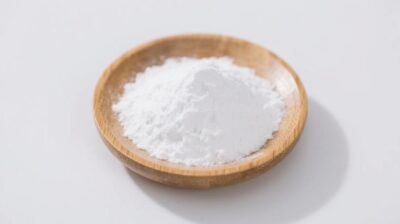
Organic Cornstarch Powder
Organic cornstarch is a certified-organic native starch from non-GMO corn. A versatile thickener and…
Related Posts


