
Why Manufacturers Choose Resistant Dextrin
When formulators evaluate soluble fiber ingredients, five technical attributes consistently place resistant dextrin ahead of alternatives like inulin and polydextrose. Understanding these advantages explains why it has become the preferred fiber source across multiple food and beverage categories.
The primary reason is digestive tolerance. Clinical studies demonstrate that subjects can consume 30 to 45 grams per day without gastrointestinal complaints. This contrasts sharply with inulin and fructooligosaccharides (FOS), which typically induce bloating at doses above 10 to 15 grams daily. For products positioned as high-fiber, this tolerance window allows formulators to deliver meaningful fiber claims without generating consumer complaints. In beverages where a serving may deliver 5 to 8 grams of fiber, cumulative daily intake across multiple servings quickly exceeds what other fibers can support.
Complete sensory neutrality is the second decisive factor. Resistant dextrin contributes no taste, no color, and no textural impact at any usage level. It dissolves fully clear in water, leaving no haze or sedimentation even at concentrations up to 10%. This invisibility means formulators can add fiber without reformulating flavor systems. In contrast, inulin contributes 30-50% of sucrose sweetness and can form gels that alter mouthfeel, while polydextrose carries a slight acidic note requiring masking.
Process compatibility further strengthens the case. The ingredient is heat-stable to 140 degrees Celsius, surviving baking, retort, UHT, and pasteurization without degradation. Its molecular structure remains intact across pH 3.0 to 8.0, meaning it withstands acidic environments that would hydrolyze inulin below pH 4.0. Freeze-thaw stability makes it suitable for frozen desserts and dough products.
For clean-label positioning, resistant dextrin offers a recognizable ingredient identity. Derived from starch through controlled enzymatic processing, it carries no chemical modifier associations. Organic-certified and Non-GMO Project verified grades support natural product claims. Unlike modified starches requiring E-number labeling in the EU, resistant dextrin qualifies as dietary fiber under Codex Alimentarius, FDA, and EFSA definitions.
Dual functionality rounds out the value proposition. Resistant dextrin serves as both a fiber fortification ingredient and a bulking agent for sugar reduction and fat replacement. It replaces physical mass lost when sugar is removed without adding sweetness or calories. Paired with high-intensity sweeteners, it enables sugar reductions of 20-50% while maintaining mouthfeel. See the resistant dextrin product specifications for detailed compositional data.
Beverage Applications
Beverages represent the strongest application category because clarity and stability address limitations that make other fibers unsuitable for liquid products.
For clear beverages — flavored waters, RTD teas, functional shots, and sports drinks — resistant dextrin dissolves at 2-8% inclusion. At 2-5%, a 250-milliliter serving supports a “good source of fiber” claim. At 5-8%, it supports an “excellent source” claim. Throughout this range, the beverage remains visually identical to the unfortified version with no haze, particles, or settling. This is critical for brands using transparent packaging.
UHT processing at 135-140 degrees Celsius for 2-4 seconds produces no detectable degradation of the fiber fraction. Acid stability down to pH 3.0 is equally robust. Carbonated beverages and fruit-flavored drinks operating at pH 2.8-3.5 maintain fiber integrity and clarity — a key advantage over inulin, which hydrolyzes progressively below pH 4.0.
For cloudy beverages — smoothies, meal replacements, protein shakes — resistant dextrin adds fiber at 2-5% without grittiness or chalkiness. It does not interact with whey, soy, or pea proteins to produce aggregation, a common problem when combining certain fibers with protein fortification.
Production teams may prefer resistant dextrin syrup at 70-75% solids. The syrup pumps at ambient temperature and disperses without pre-mixing or high-shear agitation. For detailed guidance, see the fiber enrichment formulation guide.
Bakery and Snack Applications
Baked goods require fiber ingredients that replace sugar’s bulk function without introducing side effects. Resistant dextrin replaces 20-50% of granulated sugar on a mass basis while contributing zero sweetness. Paired with high-intensity sweeteners (steviol glycosides, monk fruit, sucralose), it fills the physical volume vacated by sugar, preventing shrinkage and poor crumb structure. Its hygroscopic character extends product softness by 2-4 days in packaged breads, cakes, and muffins.
For fiber claims: 3-6% of flour weight enables a “source of fiber” claim; 6-10% enables “high fiber.” These rates apply across sandwich breads, rolls, cakes, muffins, cookies, crackers, and extruded snacks.
Heat stability to 140 degrees Celsius ensures the fiber survives baking. No special process adjustments are needed. At usage levels above 6%, add 1-2% more water to compensate for absorption.
A practical contrast with inulin is instructive. Inulin contributes to Maillard browning, darkening crust and crumb — unwelcome in white breads and vanilla cakes where consistent color is a quality specification. Resistant dextrin contributes no browning, giving the baker full control. Inulin’s gel formation can unpredictably affect crumb texture and volume, an issue resistant dextrin avoids.
Extruded snacks benefit from thermal stability under high-temperature, high-shear conditions. At 3-8% inclusion, fiber claims are supported without affecting expansion ratio or cell structure.
Dairy and Frozen Desserts
Resistant dextrin’s neutrality makes it compatible across the dairy category.
In yogurt, 2-4% achieves a fiber claim. It is added after pasteurization without affecting culture activity, acidification rate, or pH. It does not cause syneresis — a quality issue some hydrocolloid-based fiber blends aggravate. Critically, it introduces no taste that competes with fruit preparations or cultured dairy notes.
In ice cream at 3-5%, resistant dextrin serves dual roles: fiber for nutritional claims and body contribution compensating for fat in reduced-fat formulations. It suppresses ice crystal growth during freeze-thaw cycling, improving scoopability. Full freeze-thaw stability maintains properties through distribution and consumer freezer cycling.
Flavored milk and dairy beverages accept 1-3% with complete visual and flavor transparency. It dissolves cleanly without high-shear mixing or pre-hydration.
Plant-based dairy alternatives benefit particularly. Almond, oat, coconut, and rice milks naturally contain lower solids than dairy milk, resulting in thin mouthfeel. Adding resistant dextrin at 2-5% increases solids, improves mouthfeel, and enables a fiber claim without introducing off-flavors. It does not interfere with gelling systems (pectin, agar, starch) used in plant-based yogurts and frozen desserts.
Inulin’s sweetness (30-50% of sucrose) can be problematic in savory dairy products where added sweetness is unexpected. Resistant dextrin avoids this and inulin’s unpredictable gel formation.
Bars and Confectionery
Nutrition bars contain concentrated protein, sugar alcohols, and functional ingredients that challenge digestive tolerance. Adding fiber with poor tolerance profiles pushes products into discomfort territory.
Resistant dextrin at 2-5% in protein bars and 3-8% in nutrition/energy bars delivers fiber without exacerbating the tolerance burden. The 30-45 grams per day window provides headroom even accounting for cumulative intake. Beyond fiber, resistant dextrin provides light binding that helps maintain cohesion and reduces crumbling during packaging.
Polydextrose, often used in bars, has a lower tolerance threshold and can make bars dry or crumbly over shelf life, with an acidic flavor note requiring compensation. Resistant dextrin avoids these issues, offering a more neutral building block.
In confectionery — gummies, hard candy, chews — 2-5% adds fiber with the additional benefit of non-cariogenicity. Resistant dextrin is not fermentable by oral bacteria, supporting both fiber claims and sugar-free positioning. The syrup form integrates into confectionery cooking processes alongside glucose or polyol syrups. For syrup grade parameters, see the clean-label fiber solutions overview.
Supplements and Functional Foods
Supplement applications place unique demands because consumers consume measured doses and associate discomfort directly with the product. Clinical tolerance is critical for satisfaction and repurchase rates.
Fiber supplement powders benefit from the neutral taste profile that simplifies flavor development. The fine powder (100-200 mesh) dissolves readily without segregation in dry blends.
For synbiotic products combining resistant dextrin with probiotics, the slow fermentation profile provides an advantage over rapidly fermented fibers. Resistant dextrin ferments gradually throughout the colon, delivering sustained substrate supply and reducing rapid gas production responsible for bloating. Substrate also reaches the distal colon, where rapidly fermented fibers may not arrive in meaningful quantity.
In capsules, resistant dextrin flows well through filling equipment without anti-caking agents. For tablets, adequate compressibility is achieved, typically paired with standard binding agents for robust hardness.
Gummy manufacturers benefit from the syrup form, which integrates into gelatin or pectin cooking processes. At 2-5% in the finished gummy, it delivers fiber without affecting clarity, chew texture, or flavor release.
Application Reference Table
| Application Category | Product Examples | Usage Level (%) | Key Function | Processing Notes |
|---|---|---|---|---|
| Clear Beverages | Flavored water, RTD tea | 2-8% | Invisible fiber fortification | Add before pasteurization; no flavor mask needed |
| Cloudy Beverages | Smoothies, meal replacement | 2-5% | Fiber + body | Works with standard mixing equipment |
| Bread | Sandwich bread, rolls | 3-6% | Fiber claim + moisture retention | Add to dry mix; increase water 1-2% |
| Cakes & Muffins | Layer cakes, muffins | 5-10% | Sugar/fat replacement support | Pair with sweetener; increase liquid as needed |
| Cookies | Soft-baked cookies | 3-8% | Fiber + texture | Use fine powder grade |
| Yogurt | Stirred and Greek | 2-4% | Fiber claim | Add after pasteurization; no syneresis impact |
| Ice Cream | Premium and economy | 3-5% | Fat body replacement | Add before homogenization |
| Protein Bars | Meal replacement bars | 2-5% | Fiber + light binder | Mix into dry blend |
| Confectionery | Gummies, hard candy | 2-5% | Fiber + non-cariogenic | Syrup form integrates with cooking process |
| Dairy Beverages | Flavored milk, protein milk | 1-3% | Fiber fortification | Add to raw milk before pasteurization |
| Plant-Based Dairy | Almond, oat, coconut milk | 2-5% | Solids boost + mouthfeel | Standard mixing; no flavor interference |
| Supplements | Capsules, powders | As dosed | Primary fiber source | Fine powder; good flow |
Processing and Handling Considerations
Resistant dextrin integrates into standard equipment with minimal handling requirements.
The powder is moderately hygroscopic. Store sealed at temperatures not exceeding 25 degrees Celsius with relative humidity below 60%. Under these conditions, moisture pickup is negligible. Extended exposure in high-humidity environments can cause caking. Bag-in-box and supersack packaging with moisture barrier liners are recommended for bulk handling.
Resistant dextrin dissolves readily in cold water without pre-dispersion or elevated temperature. Simple propeller agitation is sufficient, unlike gums requiring high-shear dispersion. Solutions exhibit low viscosity with Newtonian flow behavior, simplifying pump sizing. At concentrations up to 20%, solutions remain easily pumpable.
The syrup form (70-75% solids) is pumpable at ambient temperature with viscosity comparable to 63 DE corn syrup. It integrates into existing liquid handling systems. Heated storage is not required.
Thermal processing compatibility covers all standard conditions: baking to 140 degrees Celsius, retort sterilization, UHT (135-140 degrees Celsius, 2-4 seconds), HTST pasteurization, and extrusion. No degradation of dietary fiber occurs. pH stability spans 3.0-8.0, covering acidic beverages, fermented dairy, and neutral-pH foods.
Powder shelf life is 24+ months; syrup shelf life is 18-24 months. Store away from strong odors, as the neutral character provides no odor masking.
About Our Organic Resistant Dextrin
Our organic resistant dextrin is manufactured under certified organic processing conditions with full batch traceability. Every production batch undergoes third-party verification of dietary fiber content (85-90%, dry basis), DE value (below 5), and microbiological specifications. With particle size and solubility optimized for commercial food manufacturing, our organic resistant dextrin delivers predictable results at production scale.
Recommended Products
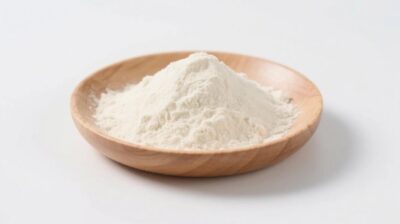
Organic Resistant Dextrin
Organic resistant dextrin is a certified-organic soluble dietary fiber (≥90% dry basis) from non-GMO…
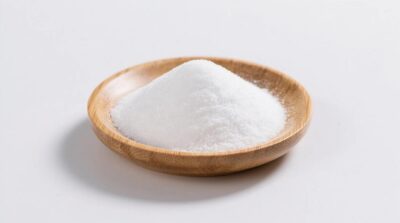
Polydextrose Powder
Polydextrose powder is a non-GMO soluble fiber with ≥90% total dietary fiber (dry basis)…
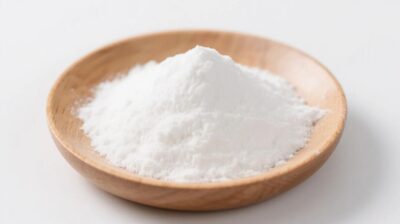
Fructooligosaccharides
Fructooligosaccharides (FOS) is a prebiotic fiber at 95% purity from non-GMO sugarcane or chicory.…


