
Cornstarch is a common kitchen staple used in cooking, baking, and food processing. However, not all cornstarch is created equal. Organic cornstarch powder and conventional cornstarch may look similar, but the differences in production, purity, and health benefits make organic cornstarch a preferred choice for many consumers and professional food producers.
What the Organic Standard Asks of a Corn Crop
The comparison usually begins with a word that sounds self-explanatory and turns out to be a legal definition. Across the major organic programmes the term covers a whole chain rather than a single property of the bag. Organic production rules generally exclude synthetic herbicides and synthetic fertilisers, restrict crop protection to a permitted list of inputs, keep genetically modified seed out of the crop, and require organic material to be identified and kept apart from conventional material all the way from storage and milling through to any blending step. The whole operation is inspected by an accredited certifier, and the certificate has to name the product it covers rather than only the field that grew the grain. None of this changes the starch molecule itself. It governs the conditions the crop was grown in, the materials allowed to touch it, and the paper trail that lets a buyer check both.
| Part of the supply chain | What organic production rules generally require | What conventional corn commonly allows |
|---|---|---|
| Chemical weed control | Synthetic herbicides are excluded, and the crop protection inputs that may be used are restricted to a permitted list | Synthetic herbicides are among the tools available to the grower |
| Soil fertility | Synthetic fertilisers are not used; fertility comes from composted or certified organic materials, crop rotation and legume fixation | Synthetic fertilisers are commonly applied to the crop |
| Genetic status of the seed | Genetically modified seed is not used, and the varieties planted come from breeding and selection carried out within those input rules | Genetically modified varieties are widely planted |
| Separation of material | Organic grain has to stay identified and separated from conventional grain through storage, milling and any blending step | Conventional material is normally handled in shared equipment, silos and transport |
| Processing aids at the mill | Only permitted processing aids are used, and unapproved additives such as bleaching agents are not used to whiten the powder | Processing aids are not confined to an organic list, and bleaching agents may be used to brighten the colour |
| Verification | An accredited certifier audits the operation and issues a certificate that names the finished product | There is no organic certificate to audit |
| Records | Records have to show where the material came from and that it has not been mixed with non-organic material | Traceability back to a specific field is not normally required |
Two consequences follow from that definition, and they explain most of what a buyer actually sees. The first is that the difference is created upstream. It happens in the field and in the handling stage, not in the milling, and a starch molecule milled from organic corn is the same molecule as one milled from conventional corn. The second is that the verification is where the difference becomes visible, which is why the certificate and the lot documentation matter as much to a professional buyer as the growing method does.
Does Organic Change the Label, the Pan, or the Price?
Once the production rules are understood, the practical question is what changes for the person buying the powder. The short answer is that very little changes at the pan and a good deal changes on the paperwork. Carbohydrate content, the absence of gluten in a pure starch powder, the neutral taste and the thickening behaviour are properties of starch, and they are the same in both versions. What differs is the evidence behind the claim, and the price that evidence carries. The comparison below sets the two side by side on the points buyers actually weigh.
| Point of comparison | Regular cornstarch | Certified organic cornstarch |
|---|---|---|
| How it appears on the ingredient line | Corn starch | Organic corn starch |
| Carbohydrate content of the powder | Effectively the same, because starch is starch | Effectively the same, because starch is starch |
| Thickening behaviour in sauces and batters | Sets and thickens on heating in the normal way | Sets and thickens on heating in the normal way |
| Taste and colour | Neutral in both cases | Neutral in both cases |
| Conditions the crop was grown under | Synthetic herbicides and synthetic fertilisers may be used | Excluded, or restricted to permitted organic inputs |
| Genetic status of the corn | May be derived from genetically modified corn | Not derived from genetically modified corn |
| Verification and documentation | No organic certificate, and lot records only on request | Certificate from an accredited certifier naming the product, plus lot-level documentation such as a certificate of analysis |
| Price per kilogram | Generally lower | Generally higher, reflecting the segregated handling and the certification work |
| Where it is usually bought | Widely stocked in retail and in bulk | More often purchased in bulk from specialist suppliers |
For a household buyer the useful checks are short. Look at what the front of the pack says about the certifier, because the word organic on its own tells you very little. Check whether the mill itself handles organic material, since a crop can be organic while the milling and blending are not. Check the ingredient line for anything that has been added after milling, because an anti-caking agent or a carrier changes what the powder does and a modified starch carries a different name on the label. For a dietary requirement, read the documentation rather than the front of the pack, and ask for the allergen statement. A deeper look at what a starch does and does not contribute nutritionally is set out in our health and nutrition facts article.
For a manufacturer or a food brand the same choice carries a different weight. Organic material has to be segregated and documented at every step, which is why it usually costs more per kilogram and is offered in a narrower set of formats, and why the certificate and the lot paperwork end up deciding the question rather than the price alone. If the specification is what you are buying against, the complete guide to organic starches sets out how starches differ in swelling, film formation and thickening behaviour, and the organic cornstarch page carries the current specification for the grade BIOSTARCH supplies, with a certificate of analysis and EU and US organic documentation for every batch. Choosing between the two powders is a sourcing decision about how the crop was grown and how it is documented; the starch that reaches the pan is the same starch either way.
Need certified organic cornstarch powder in bulk? BIOSTARCH supplies organic cornstarch powder for food manufacturers, with COA, specification sheets and EU/US organic documentation for every batch.
1. Source and Production
Organic Cornstarch Powder:
- Made from certified organic, non-GMO corn
- Grown without synthetic pesticides, herbicides, or chemical fertilizers
- Processed using clean and controlled methods
Regular Cornstarch:
- Typically derived from conventional corn, which may involve GMOs
- Often grown with chemical fertilizers and pesticides
- May undergo processing with synthetic additives or bleaching agents
The organic certification ensures a cleaner, safer ingredient for both health-conscious consumers and professional kitchens.
2. Purity and Safety
Organic cornstarch powder contains no chemical residues or artificial processing aids, making it ideal for clean-label foods and allergen-conscious formulations. In contrast, regular cornstarch may contain trace residues from chemicals used during cultivation or processing, which can be a concern for health-focused consumers.
3. Health and Dietary Benefits
Organic Cornstarch Powder:
- Gluten-free and naturally hypoallergenic
- Suitable for vegan and plant-based diets
- Compatible with low-fat and low-sugar recipes
Regular Cornstarch:
- Also gluten-free but may not meet organic or non-GMO standards
- May be less appealing for consumers seeking natural or clean-label ingredients
Organic cornstarch aligns better with modern dietary trends, offering both versatility and health-conscious appeal.
4. Performance in Cooking and Baking
While both organic and regular cornstarch function as thickeners, organic cornstarch powder is often finer and more consistent in texture. This ensures:
- Smooth sauces and custards
- Light, tender baked goods
- Improved anti-caking in confectionery powders
For professional bakers and food manufacturers, this consistency is critical in large-scale production.
5. B2B Advantages: Why Choose Organic Cornstarch Powder
At BIOSTARCH, we supply high-quality organic cornstarch powder tailored for commercial use. Our product helps bakeries, food brands, and manufacturers meet growing consumer demand for organic, clean-label ingredients.
Benefits for B2B buyers:
- Certified organic and non-GMO
- Fine, uniform texture for reliable performance
- Bulk packaging options for large-scale production
- Ideal for baked goods, sauces, desserts, and clean-label products
What to Check on the Spec Sheet Before Buying
When you compare organic and regular cornstarch, the specification sheet tells you most of what you need to know. Look for the botanical source, the organic certification such as USDA Organic or EU Organic, and whether a Certificate of Analysis is available for each batch. These documents confirm that the powder matches the claims printed on the label.
It is also worth checking mesh size, moisture content, and packaging options, since these details affect how the powder behaves in your recipes. Asking about traceability and lot records is a simple habit that prevents surprises later. If you need help reviewing specifications, BIOSTARCH is glad to walk through them with you.
Choosing organic cornstarch powder can enhance product quality, safety, and consumer trust, making it a valuable addition to your ingredient portfolio.
For specification-level detail on liquid sweeteners, including Dextrose Equivalent grades and bulk supply, see the glucose syrup guide for food manufacturers.
Q: What does organic actually mean for a bag of cornstarch?
A: It is a legal definition that covers the whole supply chain rather than a property of the powder itself. Organic production rules generally exclude synthetic herbicides and synthetic fertilisers, restrict crop protection to permitted inputs, keep genetically modified seed out of the crop, and require organic material to be kept identified and separated from conventional material through milling and blending. An accredited certifier inspects that chain and issues a certificate that names the finished product.
Q: Is organic cornstarch nutritionally different from regular cornstarch?
A: No meaningful difference. Both are pure starch, so the carbohydrate content, the calorie content and the absence of gluten are the same, and neither is sweet. What changes is how the corn was grown, what was allowed to touch it, and the documentation that travels with the material. The organic version is chosen for its production conditions and its traceability record, not for a different nutrient profile.
Q: Does organic cornstarch thicken sauces and batters differently?
A: It should not. Thickening comes from the starch granule itself, and the granule is the same whichever field the corn came from. Where a difference is reported it usually reflects a different grade, a different grind or a different particle size rather than the organic status, which is why mesh size and the viscosity profile belong on the specification sheet alongside the certification details.
Q: Is organic cornstarch worth paying more for at home?
A: That depends on the reason for buying it. For a household with no organic requirement, the regular powder does the same job for less money. The organic version earns its price when there is a specific reason: a requirement in the product you are making, a preference for avoiding crop protection inputs, a supplier audit that asks for segregation and traceability records, or a label claim that has to be supported by documentation rather than by a promise.
Recommended Products
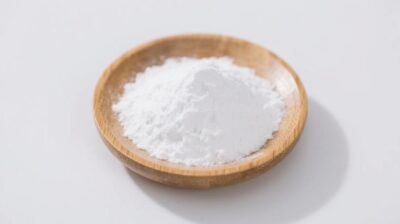
Organic Cornstarch Powder
Organic cornstarch is a certified-organic native starch from non-GMO corn. A versatile thickener and…

Organic Glucose Syrup
Organic glucose syrup is a certified-organic liquid sweetener (DE 20–60, multiple grades) from non-GMO…
Related Posts


