
Starch is the quiet workhorse of the food industry. It thickens the sauce, holds the sausage together, gives the gluten-free loaf its crumb, and keeps the yogurt from weeping in the cup. Yet the word “starch” on its own says very little. A spoonful of potato starch and a spoonful of rice starch behave so differently in a hot kettle that swapping one for the other without adjusting the process will usually ruin the batch.
This organic starches complete guide covers the five botanical sources that make up most commercial organic starch demand — potato, corn, rice, pea and mung bean — and explains how each is produced, how it performs, and what a buyer should verify before signing a specification.
What Counts as an Organic Starch
Organic starch is starch extracted from crops grown under certified organic agriculture and processed in a facility that holds organic handler certification. The two requirements are separate and both matter. Organic raw material processed in an uncertified plant cannot be sold as organic, and a certified plant cannot turn conventional crops into organic starch.
In practice, organic certification constrains the process as much as the farm. Conventional corn wet milling relies on sulphur dioxide steeping to loosen the protein matrix around the starch granules. Organic rules restrict that route, so organic corn starch producers work with water-only or lactic-acid fermentation steeping, longer residence times, and mechanical separation. The result is a slightly lower extraction yield and a higher cost base, which is one reason organic starch typically trades at a meaningful premium over its conventional equivalent.
The starches discussed here are all native starches — physically extracted, washed and dried, with no chemical derivatisation. Native starches carry a clean ingredient declaration and are simply labelled as “organic potato starch” or “organic corn starch” rather than as a modified food starch with an E-number.
The Five Sources and Where They Come From
Each botanical source deposits starch in a different plant organ, and that origin shapes the granule.
Potato starch is stored in the tuber. Its granules are the largest in commercial use and hold a small amount of covalently bound phosphate, which is unusual and gives potato starch its signature behaviour: very rapid swelling, very high peak viscosity, and an exceptionally clear paste.
Corn starch comes from the endosperm of the maize kernel and is the volume leader worldwide. It is the reference point against which most other starches are described — predictable, opaque, firm-setting, and available at scale.
Rice starch has the smallest granules of any commercial starch, roughly the size of a fat globule in unhomogenised milk. That fineness produces a smooth, creamy body rather than a heavy gel, and it makes rice starch useful wherever mouthfeel matters more than thickening power.
Pea starch is a legume starch with high amylose content and pronounced setback, meaning it firms strongly on cooling. Demand has grown alongside the plant-protein industry, since pea starch is the co-product of pea protein isolation.
Mung bean starch is the specialist. With amylose running as high as 45 percent, it forms the strongest gel of any common unmodified starch and is the traditional basis for translucent glass noodles and set jellies across East and Southeast Asia.
How Organic Starch Is Produced
All five follow the same broad wet-processing logic: liberate the granules, wash away everything that is not starch, then dewater and dry gently enough to leave the granule intact.
For potato, tubers are washed and rasped to rupture the cells, and the resulting slurry is passed through screens to remove fibre and through hydrocyclones to remove potato fruit water and protein. The washed starch milk is dewatered on a vacuum filter and flash dried. Potato processing runs cold and fast because the tuber degrades quickly once opened.
For corn, kernels are steeped, coarsely milled to release the germ, then finely milled before fibre, gluten and starch are separated in sequence by density. Organic plants substitute the conventional sulphite steep with fermentation-assisted or plain-water steeping.
For rice, the protein sits inside a tight matrix that mechanical action alone will not break. Conventional processing steeps broken rice in dilute sodium hydroxide. Organic processing leans on protease enzymes and extended steeping instead, followed by milling, sieving, washing and spray or flash drying.
For pea and mung bean, dry seeds are dehulled, soaked and wet-milled, then the slurry is separated so that the dense starch fraction settles or centrifuges out while the lighter protein and soluble fraction is drawn off. In pea processing this step is usually integrated into a protein isolate line. In traditional mung bean processing, sedimentation in tanks is still common, though modern plants use decanter and nozzle centrifuges for consistency.
Drying temperature is the critical control point in every case. Overheating pre-gelatinises the surface of the granules, which shows up later as cold-water solubility, dull paste clarity, and viscosity that no longer matches the specification.
Comparing the Functional Properties
The table below gathers the properties that actually determine formulation behaviour. Ranges reflect normal commercial variation between crop varieties and seasons.
| Property | Potato | Corn | Rice | Pea | Mung Bean |
|---|---|---|---|---|---|
| Granule size (µm) | 15–100 | 5–30 | 3–8 | 15–35 | 7–26 |
| Granule shape | Large oval | Round to polygonal | Small polygonal | Oval to reniform | Oval to bean-shaped |
| Amylose content | 20–25% | 23–28% | 15–25% | 30–40% | 40–45% |
| Crystalline type | B | A | A | C | C |
| Gelatinisation onset | 58–63°C | 62–67°C | 68–72°C | 60–65°C | 63–67°C |
| Gelatinisation peak | 63–68°C | 68–73°C | 72–78°C | 66–72°C | 69–75°C |
| Peak viscosity | Very high | Moderate | Low to moderate | Moderate | Moderate |
| Paste clarity | Clear | Opaque | Opaque | Slightly opaque | Translucent |
| Setback / gelling | Low | Moderate | Low | High | Very high |
| Freeze–thaw stability | Poor | Poor | Moderate | Poor | Poor |
Two patterns explain most of what happens in the kettle. First, amylose content drives gelling. The linear amylose chains reassociate on cooling and build a network, so high-amylose starches such as mung bean and pea set firm while low-amylose starches stay fluid. Second, granule size and phosphate content drive peak viscosity. Potato’s large, phosphate-bearing granules swell enormously before rupturing, which is why a potato starch paste can reach several times the viscosity of a corn starch paste at the same solids.
Gel Strength and Texture in Practice
Gel strength is the single most useful number for anyone formulating a set product — a jelly, a noodle, a sliceable dessert or a meat analogue. Measured on a standard eight percent gel, the ranking is consistent across the literature.
| Starch | Gel strength at 8% (g/cm²) | Relative to mung bean | Typical texture |
|---|---|---|---|
| Mung bean | 80–120 | 1.00× | Firm, elastic, sliceable |
| Pea | 70–105 | ~0.88× | Firm, slightly short |
| Corn | 30–55 | ~0.40× | Soft set, opaque |
| Potato | 15–30 | ~0.22× | Weak, cohesive, stringy |
| Rice | 15–35 | ~0.25× | Creamy, smooth, barely set |
A mung bean starch gel is therefore roughly two to three times firmer than a corn starch gel at the same concentration and four to five times firmer than potato. That is why glass noodles hold their bite after long cooking while a potato starch noodle would fall apart.
The reverse side of strong gelling is retrogradation. High-amylose starches continue to firm and eventually weep as amylose crystallises over days in cold storage. If a product must survive refrigeration or freezing without syneresis, a low-setback starch or a stabilising hydrocolloid partner is the better answer. Our guide to organic starches in industrial applications covers the process-side implications of retrogradation in more depth.
Choosing a Starch by Application
The practical question is rarely “which starch is best” but “which starch matches this process and this label.” A short mapping:
Sauces, gravies and soups — corn starch for a standard opaque body at low cost, potato starch when the sauce needs to look glossy and translucent, rice starch when a delicate creamy texture is wanted and the sauce will be pumped or homogenised.
Bakery and gluten-free — corn and rice starch dilute protein and soften crumb; potato starch holds moisture and extends softness in gluten-free bread; pea starch adds structure where the formula is short on protein.
Noodles and Asian staples — mung bean starch for translucent glass noodles, sweet potato and pea blends for chewier styles. Nothing else reproduces the clarity and bite.
Meat, seafood and analogues — potato starch is the classic binder and moisture retainer in sausage and surimi; pea starch is increasingly used in plant-based patties because it firms on cooling and matches the pea protein already in the formula.
Dairy and desserts — rice starch for creaminess in puddings and yogurt-style products; corn starch for firm custards and pie fillings.
Snacks and coatings — potato and corn starch for crisp battered coatings and expanded extruded snacks.
Confectionery — mung bean and pea starch for jelly candies that need to be demoulded and hold shape at ambient temperature.
Beyond Food: Industrial and Pharmaceutical Uses
Roughly a third to two fifths of global starch volume never reaches a plate. Paper mills use starch for surface sizing and wet-end strength. Textile mills use it for warp sizing. Corrugating plants use it as adhesive. Bioplastic producers use it as the base for compostable films and thermoplastic starch blends, an application growing faster than any food segment as single-use plastic rules tighten.
In pharmaceuticals, native corn and potato starch serve as tablet diluents and disintegrants, while rice starch is used as a hypoallergenic dusting powder and excipient. In cosmetics, rice and corn starch replace talc in loose powders and dry shampoos. Organic grades are specified in these categories mainly where a finished product carries an organic or natural certification of its own.
Specifications Worth Verifying
A starch specification looks simple until a shipment arrives that meets every listed parameter and still fails in the plant. These are the parameters that carry real information.
| Parameter | Typical specification | Why it matters |
|---|---|---|
| Starch content (dry basis) | 95% minimum | Directly sets thickening power |
| Moisture | 14% max (20% max for potato) | Affects shelf life, caking and dosing accuracy |
| Protein | 0.5% max | Drives off-flavour, browning and foaming |
| Ash | 0.5% max | Indicator of washing efficiency |
| pH (10% slurry) | 5.0–7.5 | Low pH accelerates acid thinning during cooking |
| Whiteness | 90 minimum | Visual quality; also flags over-drying |
| Particle size | 95% through 100 mesh | Dispersion behaviour and lump formation |
| Peak viscosity | Agreed range, Brabender or RVA | The only parameter that predicts kettle performance |
| Total plate count | Under 10,000 cfu/g | Baseline microbiological control |
| Heavy metals, pesticide residues | Per USDA NOP and EU limits | Organic compliance and import clearance |
Peak viscosity deserves emphasis. Two lots can match on every compositional parameter and still differ by twenty percent in viscosity because of crop variety, harvest maturity or drying history. Any buyer using starch for texture should specify a viscosity window and request the pasting curve on the certificate of analysis. Our sourcing and quality guide for organic starches sets out the full documentation checklist.
Certification and Traceability
Organic starch sold into North America requires USDA National Organic Program certification; the European Union requires compliance with Regulation 2018/848. Most buyers also expect non-GMO documentation — important for corn in particular — along with Kosher and Halal certificates and a recognised food safety scheme such as FSSC 22000 or BRCGS.
Traceability is where organic claims are usually won or lost. A credible supplier can trace a lot number back through the drying and washing lines to the specific grower group and harvest season, and can produce the transaction certificates that link each step. Buyers importing into the EU should confirm that the consignment is covered by a valid electronic certificate of inspection before shipment, not after. The same documentation discipline applies across other certified organic ingredient categories, as described in our organic isomaltitol complete guide.
Market Size and What Is Driving Demand
The global organic starch market was valued at approximately USD 1.4 billion in 2025 and is projected to reach around USD 2.6 billion by 2035, a compound annual growth rate near 6.5 percent. Corn holds the largest share of the source mix at roughly 35 percent, with potato the strongest performer in Europe. Food and beverage applications account for close to 62 percent of consumption, and North America and Europe together dominate current volume while Asia-Pacific shows the fastest growth.
Three forces sit behind the numbers. Clean-label reformulation continues to push manufacturers from modified food starches toward native organic alternatives that declare simply. Gluten-free and plant-based product lines rely heavily on starch for structure that gluten or animal protein would otherwise provide. And compostable packaging is drawing organic starch into an industrial segment that barely existed a decade ago.
The main constraint is supply. Organic acreage expands slowly, organic crop yields run below conventional, and a poor season in a key growing region moves prices sharply. Buyers who contract volume ahead of the harvest and qualify a second origin generally fare better than those buying spot. A closer look at pricing, regional supply and competitive positioning appears in our organic starches market and comparisons analysis.
About Our Organic Starches
BIOSTARCH supplies certified organic potato starch, corn starch, pea starch, mung bean starch and rice starch to food manufacturers, nutraceutical brands and industrial users worldwide. Every lot is produced under organic handler certification and tested for starch content, moisture, protein, ash, pH, viscosity, heavy metals and microbiology, with full certificate of analysis and organic transaction documentation supplied at shipment. Our technical team can help match granule size, pasting profile and gel strength to your process conditions, whether you are reformulating a sauce line for a clean declaration, building a gluten-free bakery range, or specifying a binder for plant-based protein products.
Recommended Products
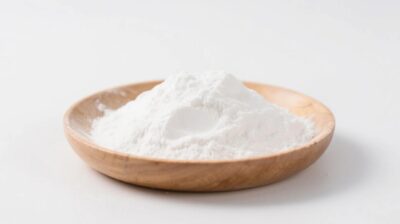
Organic Potato Starch Powder
Organic potato starch powder is a certified-organic native starch from non-GMO potatoes. With high…
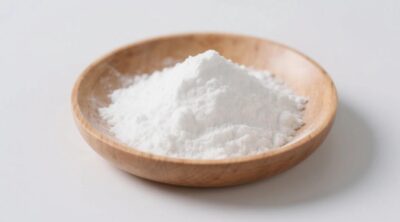
Mung Bean Starch
Mung bean starch is a native starch with high amylose content and exceptional gel…
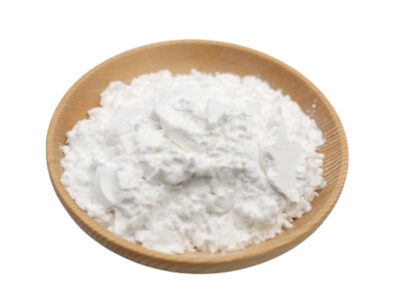
Rice Starch
Organic rice starch is a certified-organic native starch with very fine granules and a…
Related Posts


