
Organic isomaltitol has quietly become one of the most dependable bulk sweeteners for sugar-free and reduced-calorie product development. For formulators who need the body and mouthfeel of sugar without the glycemic load, it offers a rare combination of heat stability, low hygroscopicity, and a clean sweet taste. This organic isomaltitol complete guide walks through what the ingredient is, how it is produced from certified organic feedstock, how it behaves in real recipes, and what buyers should verify before specifying it.
What Is Organic Isomaltitol
Isomaltitol, most often called isomalt in the trade, is a sugar alcohol produced by hydrogenating isomaltulose. Chemically it is not a single molecule but a roughly equimolar mixture of two disaccharide alcohols: alpha-D-glucopyranosyl-1,6-sorbitol (GPS) and alpha-D-glucopyranosyl-1,6-mannitol (GPM). Both are built from glucose units, which is why isomaltitol behaves more like a bulk sweetener than a high-intensity one.
Organic isomaltitol refers to material sourced from certified organic sucrose, most commonly organic beet sugar, through enzyme-catalyzed rearrangement followed by hydrogenation. The organic claim follows the ingredient through every processing step, from feedstock to final crystalline powder. For brands building clean-label positioning, that traceability is as important as the functional performance.
In its finished form, isomaltitol is a white, odorless, free-flowing crystalline powder that looks much like refined sugar. It dissolves in water, though more slowly than sucrose, and it does not produce the pronounced cooling sensation associated with xylitol or erythritol. That neutral sensory profile is one reason it works so well in products where a cooling aftertaste would be unwelcome.
How Organic Isomaltitol Is Made
The production pathway starts with sucrose. In the first step, an enzyme rearranges the bond between glucose and fructose to form isomaltulose, sometimes known by the registered name palatinose. Isomaltulose is itself a slow-release carbohydrate with a low glycemic response. The second step hydrogenates the isomaltulose, adding hydrogen across the molecule to yield the stable disaccharide alcohols GPS and GPM that make up isomaltitol.
For the organic grade, the sucrose feedstock must come from organic agriculture, and the processing aids must comply with organic manufacturing rules. Hydrogenation uses a metal catalyst under pressure, after which the crude product is purified through activated carbon treatment, ion exchange, concentration, and crystallization. The result is a high-purity crystalline powder, typically at or above 98 percent isomaltitol content.
Because the disaccharide bonds in isomaltitol are more stable than the bonds in sucrose, the molecule resists breakdown by human digestive enzymes. That single structural feature explains most of its standout properties: it is only partially digested, contributes roughly half the calories of sugar, and produces a minimal blood glucose response.
Key Functional Properties
The table below summarizes the specification ranges that buyers and product developers work with when specifying organic isomaltitol powder.
| Property | Typical Value |
|---|---|
| Purity (isomaltitol) | 98% or higher |
| Sweetness relative to sucrose | 45 to 65 percent |
| Caloric value | 2.0 kcal per gram |
| Glycemic index | Approximately 2 |
| Moisture content | 0.5 percent or lower |
| Appearance | White crystalline powder |
| Heat stability | Stable to roughly 180 degrees C |
| Hygroscopicity | Low; stable to about 85 percent relative humidity |
| Certifications | Organic, Non-GMO, Kosher, Halal |
These values matter because they determine where the ingredient fits. The low hygroscopicity keeps powdered mixes from caking. The high heat stability lets it survive boiling and baking without breaking down or browning. The near-zero glycemic index supports “suitable for diabetics” and “low glycemic” messaging where local regulations allow it.
Sweetness, Calories, and Blood Glucose
On its own, isomaltitol delivers about half the sweetness of sucrose. That is enough to provide bulk sweetness and a sugar-like taste, but most formulations pair it with a high-intensity sweetener such as stevia or monk fruit to reach the sweetness level consumers expect. Used together, isomaltitol supplies the volume, texture, and mild sweetness while the high-intensity sweetener lifts the overall sweetness to parity with sugar. It also helps mask the bitter or licorice-like aftertaste that some high-potency sweeteners leave behind.
Calorically, isomaltitol is counted at about 2.0 kcal per gram for labeling, roughly half of sucrose. The reason is digestion: intestinal enzymes cannot easily split its stable bonds, so much of it passes into the colon where it is fermented rather than absorbed as glucose. The practical effect is a gentle postprandial blood glucose and insulin response, which is why it is widely used in reduced-sugar, low-glycemic, and keto-friendly products.
Like other sugar alcohols, isomaltitol is not cariogenic. Oral bacteria cannot ferment it into the acids that erode enamel, so it is considered tooth-friendly. This property is valuable in confectionery, mints, and oral-care applications where sugar reduction and dental health claims overlap.
How It Performs in Formulations
Isomaltitol’s stability is the foundation of its versatility. It can be boiled, baked, and processed at high temperature without losing sweetness or degrading. That makes it the preferred bulk sweetener for hard candies and sugar-free lollipops, where it produces a crystal-clear, glassy finish and resists the crystallization and stickiness that plague other polyols.
In chocolate, it reduces sugar content while preserving a smooth texture and a clean snap. In bakery, it holds up through high-temperature baking and works in cookies, cakes, and frostings. In pharmaceuticals, it serves as a direct-compression excipient and tablet coating because of its low moisture uptake and neutral taste. For a deeper look at these use cases, see our guide to industrial applications of organic isomaltitol for sugar-free product innovation.
One handling note for developers: isomaltitol is only moderately soluble in water at room temperature — about one third of sucrose’s solubility by weight — though solubility rises with heat. Formulators should account for this in beverages and syrups, where very high solids loads can cause precipitation. In most solid and baked systems this is a non-issue.
Organic Certification and Clean Label
Organic isomaltitol must be traceable to organic sucrose and produced under certified organic processing. Buyers should expect documentation covering the organic certificate of the feedstock supplier, the non-GMO status, and the food-safety certifications of the processor. Common credentials include Kosher, Halal, and standards such as FSSC 22000 or equivalent.
From a labeling standpoint, isomaltitol supports several claims that resonate with contemporary shoppers: reduced calorie, low glycemic, non-cariogenic, and clean label when free from artificial additives. It is approved for food use across more than seventy countries, with regulatory status that includes FDA GRAS recognition in the United States, authorization as E 953 in the European Union, and a JECFA evaluation with an acceptable daily intake listed as “not specified.” For the science behind its safety profile, our sourcing and quality guide covers what testing and certifications matter.
How It Compares With Other Bulk Sweeteners
Isomaltitol sits in a useful niche between the more cooling polyols and the higher-sweetness ones. Compared with xylitol, it has lower sweetness and far less cooling effect, and it is much less hygroscopic. Compared with maltitol, it offers comparable bulk behavior but a lower glycemic index and superior heat stability for hard candy. Compared with erythritol, it provides more body and a less harsh mouthfeel, though erythritol is nearly calorie-free.
For a side-by-side view across sweetness, calories, stability, and best-fit applications, our market and comparisons guide breaks down isomaltitol against other sugar alcohols and high-intensity options. If you are weighing it against another polyol you already use, our organic xylitol complete guide and organic maltitol complete guide provide useful reference points.
About Our Organic Isomaltitol
BIOSTARCH supplies certified organic isomaltitol powder produced from organic beet sugar and verified non-GMO through every processing stage. Each batch is tested for purity, moisture, heavy metals, and microbes, and is available with Organic, Kosher, and Halal documentation. Whether you are reformulating hard candy, building a low-glycemic bakery line, or developing a sugar-free pharmaceutical coating, our technical team can advise on particle size, solubility, and blend ratios to match your process.
Recommended Products
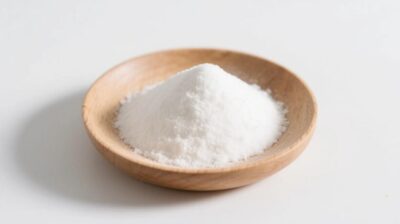
Isomaltitol Powder
Isomaltitol powder is a sugar alcohol from sucrose with a clean sugar-like taste and…
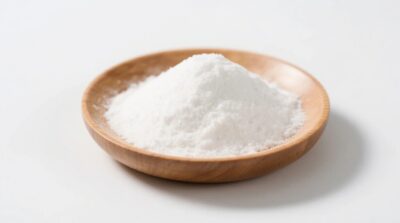
Maltitol Powder
Maltitol powder is a sugar alcohol from non-GMO corn starch with about 90% of…
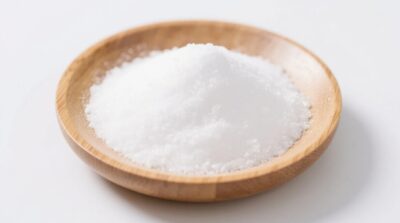
Organic Xylitol
Organic xylitol is a certified-organic sugar alcohol from non-GMO plant fiber. With about 40%…
Related Posts


