
Going gluten-free doesn’t mean you have to sacrifice the perfect texture in your baked goods. For years, home bakers have struggled with gluten-free flours that can result in crumbly, dry, or dense results. But what if there was a simple, all-natural ingredient that could change everything?
Commercial bakeries hit the same wall. A gluten-free dough that looks smooth in the mixer can collapse in the oven, and a loaf that survives the bake can still turn sandy by day three.
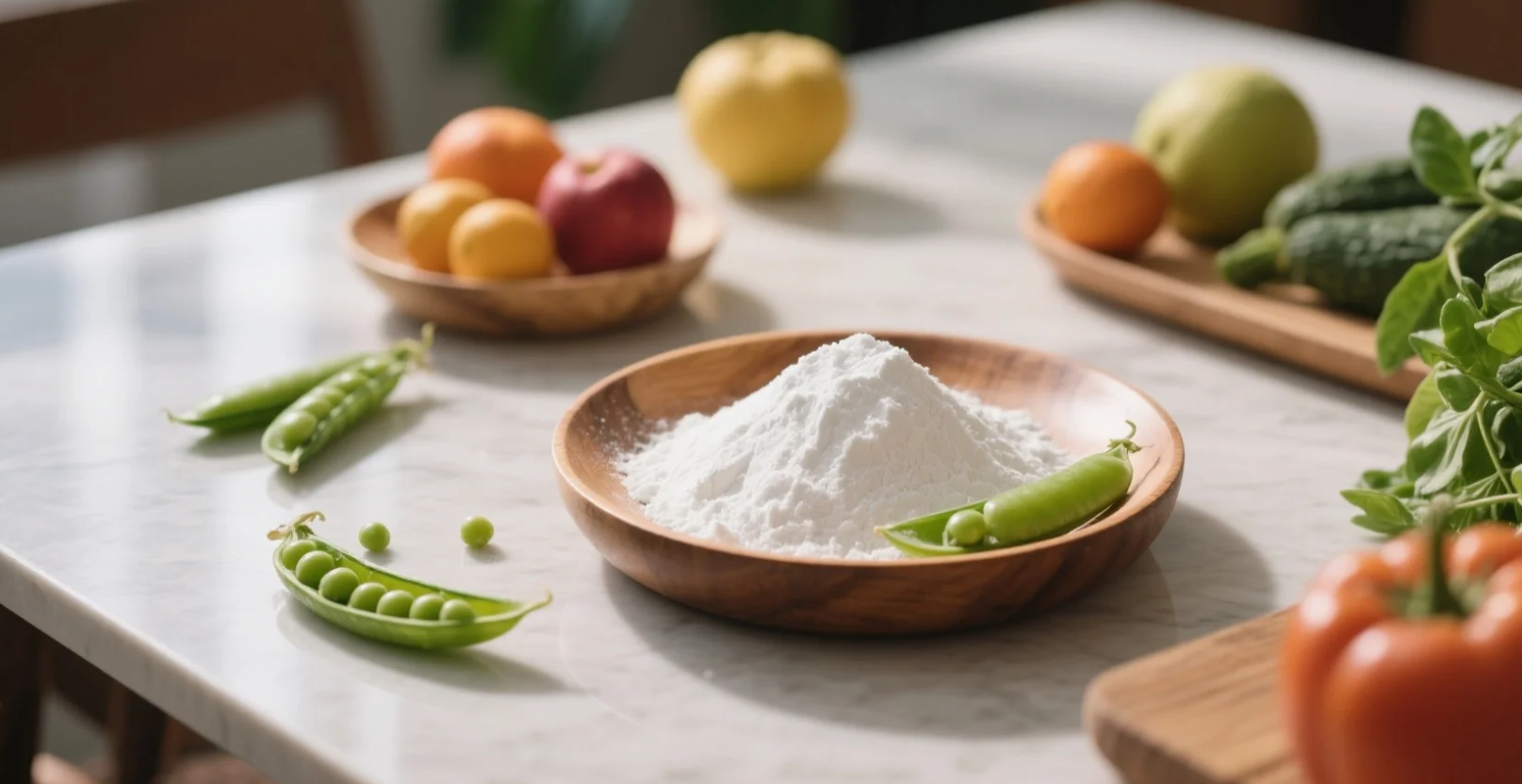
Meet organic pea starch powder, the unsung hero of the gluten-free kitchen. While you might be familiar with cornstarch, pea starch offers unique properties that can take your baking to the next level. Unlike other starches that can leave a chalky aftertaste, pea starch provides a clean flavor and a smoother texture.
Pea starch is a refined starch rather than a flour. It is washed out of yellow peas and leaves a fine, off-white powder with almost no protein, no fiber and none of the beany note of legume flours.
How Organic Pea Starch Works in Gluten-Free Dough
Pea starch granules are small and irregular, and they behave differently from wheat starch in water. Most pea starch sits at roughly 30 to 35 percent amylose and 65 to 70 percent amylopectin, and that balance decides how firm a gel it will form. In water the granules begin to swell and gelatinize somewhere between 60 and 70 degrees C, reaching full viscosity well before the mixture boils.
So, how does it work its magic? Pea starch powder is a powerful binder and thickener. When mixed with liquid and heated, its granules swell and gelatinize, creating a strong, stable structure. This process mimics the binding properties of gluten, giving your breads, cakes, and cookies that desired elasticity and chewiness.
Beyond peak viscosity, two details matter. Pea starch granules resist shear, so a batter that is pumped, homogenized or held hot for a long time keeps more of its body than a waxy corn starch would. Then, on cooling, the amylose fraction re-associates into a firm, resilient gel. In a loaf that gel sets the crumb while the dough is still in the oven, which is what stops the center from collapsing into a gummy band.
Refined pea starch is also low in protein and fiber, so questions about how pea starch powder is digested come down to the amylose content and the cook.
What Pea Starch Brings to a Gluten-Free Flour Blend
By incorporating just a small amount of pea starch into your gluten-free flour blend, you can:
- Improve crumb structure: Say goodbye to crumbly muffins and dry cakes. Pea starch helps create a moist, tender crumb.
- Enhance elasticity: It gives dough a better stretch and helps prevent it from tearing.
- Achieve a lighter texture: It can help lighten denser gluten-free flours, giving you a fluffier result.
The effect is cumulative rather than dramatic. Most blends need several starches working together, and pea starch supplies gel strength plus a neutral base for the other flavors.
Typical Usage Rates in Gluten-Free Formulations
In a gluten-free flour blend, pea starch usually accounts for 10 to 20 percent of total flour weight. A blend built on white rice flour and cornstarch usually lands near the middle of that range.
As a standalone thickener, a typical use level of 3 to 6 percent w/w, dispersed in cold water or oil before it meets hot liquid, gives a spoon-coating consistency in sauces, gravies and pie fillings. Pea starch has to be cooked out to gelatinize, so it belongs in cooked systems rather than in cold-process dressings.
Process conditions shift those numbers. Pea starch holds up across the pH range normal in food, tolerates the shear of a colloid mill, and its gel survives a freeze-thaw cycle far better than a corn starch gel.
Pea Starch Compared with Cornstarch, Tapioca and Rice Flour
Against cornstarch, pea starch sets to a slightly less glassy, more opaque gel and keeps its viscosity better in acid systems and after freezing. Against tapioca starch it gives a shorter, firmer texture instead of a long, stringy one. Rice flour is a different tool altogether: it bulks and dilutes but supplies almost no gel structure, which is why blends built on rice flour alone often feel sandy.
Teams that are replacing traditional starches in gluten-free recipes usually test pea starch against their existing cornstarch or tapioca line at the same use level, then adjust water to hit the target batter viscosity.
Organic Certification and Documentation for Buyers
Organic pea starch raises specific procurement questions. Buyers normally ask for the organic certificate covering the manufacturing site, a non-GMO statement, a specification sheet and a certificate of analysis for each lot. Pea is a legume, so allergen labeling depends on the destination market, and the declaration on the finished pack has to follow local rules even though refined starch contains very little protein.
Batch-to-batch consistency is the other half of the conversation. Viscosity, moisture and granule size distribution are the three figures most likely to move a formulation, and they are also the figures worth reviewing before a new supplier is approved. Brands working on short ingredient decks can also see how the same starch behaves in organic pea starch for clean-label products.
It’s more than just a substitute; it’s an upgrade. Whether you’re a seasoned baker or just starting your gluten-free journey, keeping organic pea starch powder in the pantry gives you a dependable tool for repeatable results. That is a practical route to delicious, well-textured gluten-free baking.
About Our Organic Pea Starch
BIOSTARCH supplies organic pea starch powder milled from non-GMO field peas and certified to organic standards. It is a fine, off-white starch with a neutral taste, consistent granule size and stable viscosity, packed in 25 kg bags and bulk quantities for food manufacturers.
Every shipment travels with a certificate of analysis, a specification sheet and the organic documentation a quality team will ask for, plus samples for bench trials.
Recommended Products
Pea Starch Powder
Pea starch powder is a native starch with high amylose content from non-GMO yellow…
Related Posts


