
Think of organic cornstarch powder, and you probably picture a silky-smooth sauce or a perfectly thickened gravy. And you’d be right—it’s a kitchen hero for those tasks. But what if we told you that little box holds the power to do so much more?
Six Jobs the Powder Handles Without Thickening Anything
The household jobs described above work on a small scale, with a bag of powder and a kitchen counter. The same powder is also used where a sauce would never be made of it: in a coating that has to stay crisp in hot oil, in a packaging film that has to hold together, in a fermenting vessel, and in a powder blend. The list below is organised by the job rather than by the recipe, because the same handful of starch properties keep showing up underneath. Absorption, film forming, gelation, adhesion and a neutral taste are the five things worth holding on to, and each use in the table is one of them put to work.
| Application | What the starch is doing there | What to watch |
|---|---|---|
| Batter and breading for frying | It forms a light, porous shell around the food and keeps that shell from going soggy, because it does not rewet the way a flour coating does | Dredge first and batter second gives the most even result, and too much coating turns heavy and greasy |
| Paper, board and packaging | It acts as a binder and sizing component that holds the sheet together and raises surface strength, and as a film former in some compostable laminates | Granulation and viscosity have to repeat from one delivery to the next, which is a specification question rather than a trial question |
| Compostable film and starch-based plastics | It forms the continuous matrix that gives the finished piece its stiffness and limits the cracking an unconditioned starch matrix would show | Moisture handling during conditioning decides whether the film flexes or snaps |
| Adhesives, pastes and sealing | It provides body and tack in a natural paste, and a controlled set time in a board or paper adhesive | Open time and set time have to match the speed of the line, not the patience of a bench trial |
| Fermentation and brewing | It is a fermentable carbohydrate that a culture or an enzyme can work on, which makes it a predictable substrate rather than a variable one | Everything downstream depends on how completely the starch is hydrolysed, so the profile of the lot matters |
| Cosmetics and personal care | It absorbs oil and moisture while leaving a dry, matte feel, which is why it appears in dusting powders and in the absorbent base of oil-free products | Food-grade starch is not the same thing as a registered cosmetic ingredient, so personal-care formulations need their own documentation and their own rules |
Two of those rows are easy to underestimate. The frying row is a technique as much as an ingredient, because the order of the coatings decides how much oil the food takes up: starch pressed directly onto the surface dries first and forms a barrier, while a wet batter on top of it gives volume. The fermentation row matters to anyone who wants a repeatable result, because starch is a predictable carbohydrate to hand to a culture, and a specification that describes the lot makes the outcome repeatable as well.
The Five Properties That Explain Every One of Them
Rather than learning each application on its own, it is easier to learn the properties and read the applications off them. The table below puts the properties first and shows where each one shows up in the list above, including in the kitchen uses that everybody already knows.
| Property of the starch | What it does | Where it shows up |
|---|---|---|
| Absorption | Takes up moisture and holds it, so a surface stays dry and a loose powder picks up what it is spilled on | Dusting powders, oil-absorbing cosmetics, absorbent pads, and cleaning up a grease spill on fabric |
| Film forming | Dries into a thin continuous layer that resists moisture and can be flexible or crisp depending on how it is set | Coatings for fried food, compostable packaging laminates, paper sizing, and the film that holds a powder blend together |
| Gelation | Swells with heat and water and sets into a soft body on cooling, with the amylose fraction deciding how clear and how firm the result is | Sauces, gravies, custards and pie fillings, and the set of a chilled dessert |
| Adhesion | Clings to a surface and to other fibres, which is what turns it into a binder rather than just a filler | Paper and board adhesives, sealing pastes, and the dusting that keeps dough from sticking to a tray |
| Neutral taste and colour | Adds body without adding a flavour of its own, so it disappears into whatever it is mixed into | Seasoning blends, confectionery powder, and any formulation where the starch must not be tasted |
That framing also explains why the powder behaves differently when it is heated dry rather than wet. Dry heating drives off moisture and promotes browning on the surface, which is where the crispness of a fried coating and the toasted note of a baked crust come from. Wet heating swells the granule and thickens whatever surrounds it. A buyer who understands those two routes can pick a grade on the basis of which one the job actually needs, and can ask the supplier a sharper question than the one on the front of the pack.
For a supplier conversation, the organic cornstarch that BIOSTARCH supplies comes with a certificate of analysis per lot, a non-GMO statement, allergen declarations and current organic documentation, which is the paperwork these uses call for. The industrial applications of organic starches article covers the wider manufacturing picture, and the everyday uses of organic starches piece picks up the household jobs in more detail.
Organic cornstarch is not just for cooking. Its fine, absorbent, and pure nature makes it an incredibly versatile, non-toxic staple for your entire home. Here are five surprising ways to put it to work, proving it’s an essential ingredient you can’t live without.
Cornstarch in the Kitchen and on the Production Line
Corn starch is the most widely used thickening starch in the food industry, and for good reason. A normal corn starch granule is roughly 27% amylose and 73% amylopectin; on cooling, the amylose chains reassociate and build the soft, opaque gel that gives puddings and pie fillings their body. Waxy corn starch, almost entirely amylopectin, sets clear and resists retrogradation better.
Thickening Sauces, Gravies, and Fillings
Corn starch typically gelatinizes between about 62 °C and 72 °C, higher than potato starch, so it needs a little more heat before it thickens. A common starting ratio is one tablespoon of starch per cup of liquid, roughly 8 g per 240 ml, slurried in cold water before it goes into the pan. Simmer it for a minute or two to take away the raw cereal taste.
Corn starch is more tolerant of prolonged boiling and shear than potato or tapioca starch, which is why it is preferred for retorted and pouch-packed products. Our guide to using organic cornstarch as a natural thickener covers the practical differences at the stove.
Gluten-Free Baking and Dusting
In gluten-free baking, corn starch lightens the crumb and replaces some of the structure that wheat flour would normally supply. Typical blends use 15 to 25% corn starch by weight, with the rest made up of whole-grain gluten-free flours and a binder such as xanthan gum or psyllium. Dusting a tin or work surface with corn starch also stops sticking without a floury residue.
Crisp Coatings and Frying
Corn starch is the standard choice for a light, crisp coating. It gelatinizes at the surface of the food and forms a film that dehydrates into a brittle shell, and it holds less oil than a flour-based dredge. It also keeps the coating from going limp, as our article on crispy, low-oil frying explains.
Clean-Label Formulation
Unmodified organic corn starch appears on an ingredient list as corn starch or organic corn starch. That simplicity is its main advantage in clean-label work, where a modified starch needs a name consumers have to look up. It is used in sauces, dressings, bakery fillings, and snack seasoning.
Food-Grade and Certified Organic Cornstarch: What to Check
Organic corn starch is milled from corn grown without synthetic pesticides or fertilizers and has to be kept separate from conventional material through the whole process, including any blending step. When you buy organic cornstarch powder for manufacturing, check the specification for moisture, pH, viscosity profile, protein content, and ash, and confirm that the organic certificate names the finished product.
BIOSTARCH supplies organic cornstarch with a certificate of analysis per lot, a non-GMO statement, and allergen declarations, and can advise on how the organic material compares with the conventional grade, a question we answer in our comparison of how organic cornstarch differs from the regular grade.
Beyond the Kitchen: Five Surprising Uses for Organic Cornstarch
The uses below come from the same fine, absorbent powder that thickens a sauce, applied to household jobs. They are home suggestions rather than product claims: a food-grade starch is not a registered cosmetic ingredient, and personal care follows its own regulations.
The Ultimate Dry Shampoo
Forgot to wash your hair? No problem. Sprinkle a small amount of organic cornstarch onto your roots and gently work it in. It will absorb excess oil and give your hair a fresh, clean look without the chemicals found in many commercial dry shampoos. Brush it out for a natural, refreshed feel.
A DIY Deodorant Alternative
For those looking for a natural, aluminum-free deodorant, organic cornstarch is your answer. Simply mix it with a bit of baking soda and a carrier oil like coconut oil to create a paste. It absorbs moisture and helps neutralize odor, keeping you feeling fresh all day.
Soothe Skin Irritations
Cornstarch has a long history of use for its soothing properties. It can be used to calm minor skin irritations, such as rashes, insect bites, or sunburn. Create a simple paste with water or just dust the powder directly onto the affected area to reduce redness and discomfort.
Untangle Knots and Tangles
Got a tangled necklace or a stubborn shoelace knot? A little organic cornstarch can act as a lubricant to help you untangle it with ease. Just dust a small amount over the knot and use your fingers or a pin to gently work it loose.
Clean Up Spills and Stains
For grease or oil spills on fabric or carpet, cornstarch is a powerful absorbent. Immediately pour a generous amount onto the stain to draw out the oil. Let it sit for about 15-20 minutes, then vacuum or brush it away. This works great on anything from a dropped french fry to a cooking oil spill.
With a little creativity, a simple box of organic cornstarch powder can become your go-to solution for everything from beauty and personal care to household cleaning. It’s a pure, effective, and surprisingly powerful tool that deserves a spot front and center in your pantry.
About Our Organic Cornstarch
BIOSTARCH supplies organic cornstarch milled from certified organic corn and processed to food-grade specification. The powder is a fine white starch with a neutral taste, free from gluten and the major allergens, and is offered in bulk for food and beverage manufacturing. Buyers can request a specification sheet, a sample, and current organic certification before placing an order.
Q: What can cornstarch be used for besides thickening sauces?
A: Quite a lot. It absorbs moisture, forms a film when it dries, swells and sets with heat, binds to surfaces, and carries no flavour of its own. Those properties take it into batter and breading for frying, paper and packaging, compostable film and starch-based plastics, adhesives and pastes, fermentation substrates, and absorbent powders in cosmetics. Each of those is a different job, and each depends on a different one of the same five properties.
Q: How do you get the crispest coating when frying with cornstarch?
A: Dredge first and batter second. Pressing starch directly onto the surface dries first and forms a moisture barrier, and the wet batter on top of that adds volume without making the coating heavy. Too much coating is what makes fried food greasy, because the extra layer holds oil rather than keeping it out, and a coating that goes limp after a few minutes usually means too much batter and not enough starch in it.
Q: Can cornstarch be used to make paper, packaging or compostable film?
A: Yes, though it is an industrial job rather than a kitchen one. Starch works as a binder and sizing component in paper and board, and it forms the continuous matrix in starch-based plastics and compostable films, where it sets the stiffness of the finished piece. The deciding factors are repeatability between deliveries and how the material is conditioned, so a supplier should be asked for the granulation, the viscosity profile and the documentation for the specific grade before a trial is scheduled.
Q: Is cornstarch safe to use in cosmetics and DIY personal care?
A: It is a common ingredient in cosmetic powders, but food-grade starch and a registered cosmetic ingredient are not the same thing, and personal-care formulations follow their own rules. For anything you make at home, the honest framing is that a food-grade starch is a household material rather than a cosmetic one. If a product is going to be sold or used on skin in a commercial context, the documentation and the regulatory status for that use need to come from the supplier.
Recommended Products
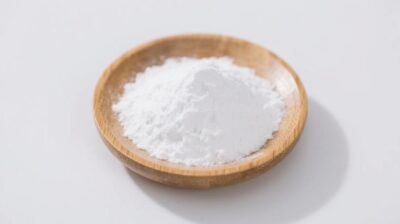
Organic Cornstarch Powder
Organic cornstarch is a certified-organic native starch from non-GMO corn. A versatile thickener and…
Related Posts


