
Inulin is one of the most widely used prebiotic fibres in food manufacturing, and it is also the ingredient most often misunderstood. It is a natural fructan, a chain of fructose units, extracted from the root of the chicory plant, also known as the Jerusalem artichoke. Inulin is not a synthetic additive and it is not a sweetener in the usual sense: it carries a mild sweetness of roughly 10% of sucrose and its real value is functional. It dissolves in water, it binds texture, it carries moisture and it reaches the lower gut where it is fermented selectively. This guide covers what inulin is, how the different prebiotic fibres compare, what the specifications mean and what to specify when you buy inulin in bulk.
| Field | Value |
|---|---|
| Product | Organic inulin powder (chicory root inulin) |
| Source | Dried chicory root, also sold as Jerusalem artichoke inulin |
| Type | Fructan, a linear chain of fructose units |
| Key parameter | Degree of polymerisation (DP) |
| Typical sweetness | About 10% of sucrose |
| Solubility | Soluble in water at room temperature, faster in warm liquid |
| Form supplied | Powder, granules and syrup |
| Shelf life | 24 months when sealed, cool and dry |
| Supplier | BIOSTARCH |
What Is Inulin?
Inulin is a naturally occurring fructan, a type of carbohydrate made of fructose units joined by beta-2,1 bonds. The name comes from the Latin for the chicory root, the plant it is extracted from. The root is harvested, sliced and dried, and the fructan chains are then extracted with hot water and purified, which yields a white to slightly off-white powder.
The technical parameter that matters most is the degree of polymerisation, or DP, which is simply the number of fructose units in the chain. Short-chain inulin with a DP of 2 to 6 dissolves quickly and gives a smooth texture. Long-chain inulin with a DP above 20 is less soluble and delivers a more pronounced fibre effect. Most food applications sit in the middle range, and a buyer who specifies only the word inulin may receive a product at either end of that range.
Two other facts shape how inulin behaves. It is mildly sweet, roughly a tenth of the sweetness of sucrose, which is enough to soften the taste of a sweetened base without adding significant sugar. And it is hygroscopic, which means it holds water, and that is why it improves mouthfeel and keeps baked goods soft for longer.
Inulin vs Other Prebiotic Fibres
Every prebiotic fibre is fermented by a similar set of bacteria in the lower gut, but they are not interchangeable. The differences in chain structure, sweetness, solubility and how much of the dose reaches the colon determine which one belongs in a given product. This comparison covers the four fibres most often specified together.
| Fibre | Source | Sweetness | Solubility | Typical use |
|---|---|---|---|---|
| Inulin | Chicory root | About 10% of sucrose | Good, faster in warm liquid | Dairy, bakery, drinks |
| Fructooligosaccharides (FOS) | Fermented or enzymatic from sugar cane | About 30-40% of sucrose | Very good | Synbiotics, bars, drinks |
| Galactooligosaccharides (GOS) | Fermentation of lactose | Low, around 20% of sucrose | Good | Infant formula, dairy |
| Resistant dextrin | Hydrolysed corn starch | Low, around 5-10% of sucrose | Excellent, no grit | Bars, drinks, bulking agent |
The practical consequence is that the inclusion rate is not transferable. A product developed with inulin at 3% will not behave the same way with fructooligosaccharides at 3%, because the sweetness, the dissolution and the fermentation profile all change. Buyers comparing prebiotic fibres should fix the target claim first, then select the fibre that delivers it, and only then compare price per kilo.
Inulin Forms: Powder, Granules and Liquid
Inulin is supplied in three physical forms, and the choice is driven by the process on the line rather than by the ingredient itself. Powder is the most common form and dissolves in warm liquid or in a mixing step. Granules are used where a dry, free-flowing ingredient is needed in a blend, and they are easier to meter into a dry mix. Syrup is supplied as a pre-dissolved solution for applications where the process has no dissolution step available.
Dispersion is the practical issue with powdered inulin. It hydrates quickly on the surface and forms lumps if the powder is added too fast or into a cold liquid, so a two-stage addition, or a slurry in a small amount of warm liquid, gives a clean result. Where a plant wants to remove that step entirely, the syrup form removes the dispersion problem and the dust problem at the same time.
Applications in Food Manufacturing
Dairy
Inulin is the standard prebiotic fibre in stirred yogurt and milk drinks, where it dissolves in the milk phase and improves body and mouthfeel while carrying a fermentable fibre. It is also used in fermented dairy and in cheese spreads, where a small addition softens the texture without altering the flavour.
Bakery
In a dough, inulin acts as a soluble fibre that holds water and slows staling, which is why it is used in wholegrain breads and in low-carbohydrate bakery lines. It also replaces part of the fat in soft baked goods, since its water-holding capacity gives a similar mouthfeel at a lower inclusion rate.
Nutrition bars and snacks
Nutrition bars are the classic high-inclusion application. At 8% to 15% of the bar weight, inulin contributes bulk and binds the matrix, which is what makes a high-fibre bar possible without a binder system. The specification that matters here is the chain profile, because a longer chain gives a firmer bar and a shorter chain dissolves more easily in a hot process.
Beverages and supplements
In beverages, inulin is used for fibre enrichment and for mouthfeel, and it is often combined with a soluble fibre to reduce the grit that a single high-DP fibre can produce. In dietary supplement powders, it is the carrier of choice for a fibre dose, which is where the granule form is used, since the powder is blended with the active ingredients and filled into sachets or capsules.
Specifications and Quality Parameters
Every batch is tested before release and issued with a certificate of analysis covering the parameters below.
| Parameter | Specification |
|---|---|
| Appearance | White to off-white powder, no visible crystals |
| Degree of polymerisation | Confirmed per order and stated on the certificate of analysis |
| Dry substance | Minimum 95% |
| Moisture | Maximum 5% |
| Total carbohydrate | Minimum 90% |
| Total sugars | Maximum 10% |
| Ash | Maximum 1.0% |
| Protein | Maximum 1.0% |
| pH (10% solution) | 4.5-7.0 |
| Particle size | Passed 100% through 500 microns |
| Total plate count | Maximum 1,000 CFU/g |
| Yeast and mould | Maximum 100 CFU/g |
| Escherichia coli | Absent |
| Salmonella | Absent in 25 g |
How to Specify Inulin for a Bulk Purchase
When requesting a quotation for inulin powder in bulk, three details determine whether the sample matches the production line.
First, the chain profile. The degree of polymerisation decides how the fibre dissolves and how the finished product feels, and a quotation that only says inulin powder leaves that open. Where a specific range matters, state it on the order and have it confirmed on the certificate of analysis for the batch.
Second, the form. Powder, granules and syrup are supplied for different processes, and the format affects the handling steps at the plant. A liquid product removes dispersion and dust, while a powder is easier to ship and store at ambient conditions.
Third, the documentation. A current certificate of analysis, an organic certificate for the batch, a specification sheet and a safety data sheet should accompany every delivery, and the microbial limits should be stated rather than assumed.
Questions Buyers Ask About Inulin
Q: What is inulin and where does it come from?
A: Inulin is a natural fructan, a chain of fructose units, extracted from the root of the chicory plant, also known as the Jerusalem artichoke. It is mildly sweet at about 10% of the sweetness of sucrose and works as a soluble prebiotic fibre rather than as a sweetener.
Q: Is inulin the same as inulin powder?
A: Inulin is only sold as a powder, so the difference is specification rather than form. Plain inulin usually refers to a standard grade with a shorter chain profile, while specification-grade inulin powder has a defined degree of polymerisation and a declared analytical profile. The source is chicory root in both cases.
Q: Is inulin the same as fructooligosaccharides?
A: No. Inulin, fructooligosaccharides, galactooligosaccharides and resistant dextrin are different prebiotic fibres with different chain structures, sweetness, solubility and fermentation profiles. They are not interchangeable at the same inclusion rate, so the fibre type should be stated on the order.
Q: How much inulin should I use in a recipe?
A: Typical applications run between 2% and 5% of the finished weight for dairy and bakery, and 8% to 15% in nutrition bars. Because inulin is a fermentable fibre, the dosage is usually introduced in stages and confirmed against a sensory panel and the declared carbohydrate calculation for the target market.
Q: Does inulin cause digestive discomfort?
A: At high intakes, any fermentable fibre can cause gas and bloating, particularly when the dose is increased quickly. Starting at a lower inclusion rate and building up over several weeks is the usual approach. The practical guidance for a formulation is to set the rate that the target consumer tolerates rather than the maximum the fibre can carry.
Q: Do you supply inulin in bulk powder and syrup?
A: Yes. Inulin is supplied as powder, granules and syrup, with the format agreed before production so the material is not repeatedly transferred. Each lot is issued with a certificate of analysis, an organic certificate, a specification sheet and a safety data sheet.
Storage, Shelf Life and Labelling Position
Inulin powder is stable in a cool, dry place, sealed and away from direct sunlight, which is what allows a 24-month shelf life on a standard grade. It is hygroscopic, so an opened bag will take on moisture from the air, and the practical rule is to reseal the packaging immediately after use and to keep the original container rather than decanting it. Inulin syrup grades are supplied with their own storage instruction, since the microbiological profile and the water content of a liquid product are different from those of a dry material.
For labelling, the position to confirm is the one that applies in the market where the finished product is sold. Whether a given dose counts towards the declared fiber content, and under which analytical method, depends on the local regulation and on the method used to measure it. The practical approach for a manufacturer is to fix the target claim first, ask the supplier for the analytical method behind the fiber value on the certificate of analysis, and confirm that method against the requirement of the destination market before the formulation is locked.
Products from BIOSTARCH
BIOSTARCH supplies the wider prebiotic fibre range that usually sits alongside inulin in a formulation. Organic inulin powder is the chicory root grade, supplied in bulk with a full certificate of analysis. Fructooligosaccharides cover the sweeter, more soluble end of the prebiotic range, and galactooligosaccharides serve dairy and infant formula applications. For a high-fibre bulking system with a clean mouthfeel, organic resistant dextrin is the low-grit option, and organic stachyose powder and xylooligosaccharides extend the choice further for specific applications. How resistant dextrin behaves in a formulation is covered in our guide to adding fibre without changing taste or texture.
Recommended Products
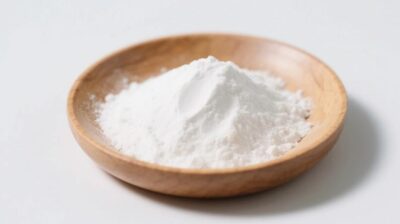
Organic Inulin Powder
Organic inulin is a certified-organic prebiotic soluble fiber (90%+) from non-GMO chicory. It adds…
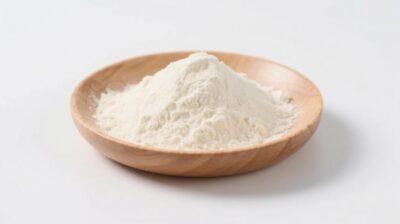
Organic Resistant Dextrin
Organic resistant dextrin is a certified-organic soluble dietary fiber (≥90% dry basis) from non-GMO…

Stachyose powder
Organic stachyose powder is a certified-organic tetrasaccharide prebiotic from Chinese artichoke. Effective at low…
Related Posts


