What’s L-Arabinose powder?
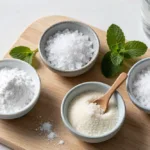
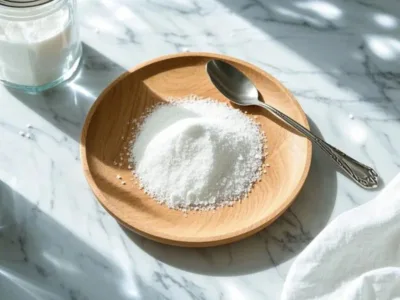
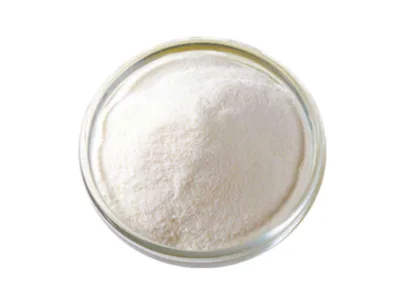
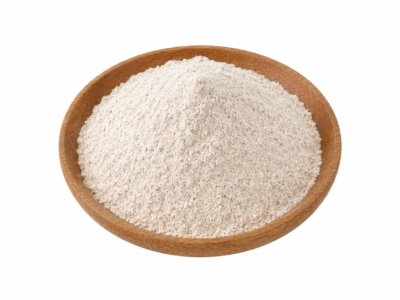
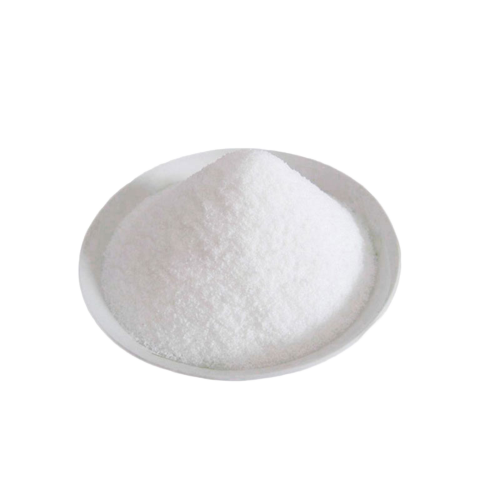
L-arabinose powder uses corn cob as raw material for extraction, decolorization, dehydration, and crystallization. It is a white crystalline powder, odorless and sweet (sweetness is about 50% of sucrose). It is soluble in water, but the solubility is lower than that of sucrose; it has high stability to heat and acid.
L-arabinose is an aldopentose which is more common than D-arabinose in nature, and is a rare sugar with minimal caloric contribution.
L-arabinose can inhibit the activity of Sucrase/Maltase. Therefore, it may help reduce the glycemic response to sucrose when consumed alongside sucrose-containing foods.
Also Known As: Names and Synonyms in the Trade
L-Arabinose appears on specifications and certificates of analysis under a handful of names, most of them historical. Two things are worth separating before anything else: the L- form is the material with the commercial sucrase-inhibiting activity, and D-arabinose, a different stereoisomer of the same five-carbon sugar, must not be substituted for it on a specification or a label. The list below covers the names that come up in enquiries, reference-standard data sheets and customs paperwork.
- Pectin sugar – the older name recorded for L-arabinose in the FDA’s substances-added-to-food inventory, taken from the plant gums the sugar was first isolated from
- Pectinose – the companion historical synonym on the same inventory, still seen in older chemical catalogues
- L-Arabinopyranose – the ring-form name used on reference-standard data sheets, which states the pyranose ring explicitly
- FEMA 3255 – the flavouring-substance number under which L-arabinose is recorded, quoted when the ingredient is bought against a flavouring specification
- Corn-cob L-arabinose – the trade designation for material extracted from corn-cob hemicellulose, which is the dominant commercial route
- CAS 5328-37-0 – the registry number quoted on certificates of analysis and customs entries
The name a supplier uses for the L- form is usually the least ambiguous part of the offer; the assay, the specific rotation and the source declaration are where two quotations actually differ. Write the name and the form into the contract and the specification so that a substitution with the D- form or with lower-assay material cannot pass on paper.
Specification
| Product Name | L-Arabinose Powder |
|---|---|
| CAS No. | 5328-37-0 |
| MF | C5H10O5 |
| Appearance | White crystalline powder |
| Assay | ≥99.0% |
| Loss on drying | ≤1.0% |
| Residue on ignition | ≤0.1% |
| Melting point | 154-158°C |
| Specific optical rotation | +100 to +104° |
| Heavy metals | ≤5mg/kg |
| Chloride | ≤50mg/kg |
| Sulfate | ≤50mg/kg |
| Arsenic | ≤0.5mg/kg |
| Total Plate Count | ≤500CFU/g |
| Coliforms | ≤30MPN/100g |
| Mold | ≤25CFU/g |
| Yeast | ≤10CFU/g |
| Storage condition | Ventilate dry condition |
| Batch size | 1000g |
| Pathogenic bacterium | Not detected |
Sourcing, Certification and Regulatory Status
| Jurisdiction / Standard | Regulatory status | Legal name | Notes |
|---|---|---|---|
| European Union | Not an EU-listed food additive; handled as a food ingredient | L-Arabinose | There is no E number and no L-arabinose-specific provision. Whether a given material needs an authorisation under Regulation (EU) 2015/2283 depends on its documented history of consumption in the EU before 15 May 1997, so the position has to be confirmed with the destination member state |
| United States | Recorded for flavour use as a FEMA GRAS flavouring substance; a GRAS notice has been filed for food use | L-Arabinose | Listed in the FDA substances-added-to-food inventory as a flavour enhancer and flavouring agent under FEMA No. 3255, and the subject of GRAS Notice 782, which covers uses including bakery products, baking mixes, condiments, confectionery, dairy products and snack foods. The conditions of that notice have to be matched to the intended use |
| Japan | Listed food additive; also used as the functional component of products positioned for blood-sugar control | L-Arabinose | Listed in the Japan Specifications and Standards for Food Additives, 9th edition (2018); the current edition and entry should be confirmed with the importer. Claim-bearing use runs through the FOSHU and Foods with Function Claims routes, so the permitted wording has to be authorised for the finished product |
| Codex Alimentarius | Used as an ingredient rather than as a regulated additive | L-Arabinose | No product-specific Codex standard applies. The buyer’s own specification and the rules of the destination market govern the trade, and neither substitutes for the other |
L-Arabinose is a single, well-defined molecule, which makes the specification easier to police than most. The figures that separate two offers are the assay, the specific optical rotation, the residue on ignition and the heavy-metal and microbiological limits, and those are the ones to hold against the certificate of analysis. Confirm the legal name and the permitted use with the destination market before the first shipment.
Application
All kinds of food, milk, beverage, etc.
The preparation for flavors and fragrances.
The preparation for pharmaceuticals.
Quality and Certification
BIOSTARCH L-arabinose is manufactured under an ISO 22000 food safety management system from certified organic corncob hemicellulose. Each production lot is tested for assay by HPLC, optical rotation, moisture, residue on ignition, heavy metals, and microbiological limits before release. Shipments are accompanied by a Certificate of Analysis, an organic certificate identifying the corncob origin, a non-GMO declaration, an allergen statement, and a Safety Data Sheet, so that buyers can complete supplier qualification without additional requests.
Formulation Guidance
L-arabinose is typically dosed at three to five percent of the sucrose present in a formulation, which is the range where sucrase inhibition measurably lowers the post-meal glucose response. It dissolves readily, carries about half the sweetness of sucrose, and tolerates both heat and acid, so it can be added to baked goods, table-top sweetener blends, powdered drinks, and jams without process changes. It is commonly combined with erythritol or stevia to restore full sweetness while keeping the glycemic benefit.
Format and Grade Selection
Two questions are settled before a specification is agreed: which assay, and which source material. Both follow from the application rather than from the label.
- ≥99.0% assay – the grade on our specification sheet, tested with moisture, residue on ignition, heavy metals and microbiological limits before release
- Crystalline powder – the form supplied, with loss on drying held to ≤1.0% and a melting point of 154–158 °C quoted on the certificate of analysis
- Optical rotation – specific rotation is controlled between +100 and +104°, the figure that identifies the L- form and separates it from the D- form
- Corn-cob derived material – the dominant commercial route and the source named on our organic certificate; material from sugar beet pulp also circulates in the trade, so the declared source has to match the certificate
- Sucrose-companion grade – the application in which the ingredient is dosed at three to five percent of the sucrose present, in table-top blends, baked goods, powdered drinks and jams
- Bulk packing – 25 kg multi-wall paper bags with a food-grade polyethylene liner, with 500 kg and 1,000 kg bulk bags for industrial users
Handling Note: The commercial effect depends on the ratio to sucrose rather than on the absolute dose, so the same gram weight of L-arabinose behaves differently in a full-sugar and in a reduced-sugar recipe.
Tell us the application, the sucrose load and the process temperature when requesting a sample, and we will quote the grade and the packing that fit it. Samples for formulation trials and private-label packing are both supported, and the export documentation for regulated food markets is issued with the shipment.
Packaging and Supply
Standard packaging is a 25 kg multi-wall paper bag with a food-grade polyethylene liner, with 500 kg and 1,000 kg bulk bags available for industrial users. Store sealed in a cool, dry area away from strong odours; shelf life is 24 months from the manufacturing date. BIOSTARCH supplies samples for formulation trials, supports private-label packing, and provides the export documentation required for shipments into regulated food markets.
FAQs
Q: Is this L-arabinose, and how is it distinguished from D-arabinose?
A: It is the L- form, an aldopentose. D-Arabinose is a different stereoisomer and is not a substitute for it. The specific optical rotation and the melting point on the Certificate of Analysis are the two figures that identify the L- form, and both are quoted on our specification sheet.
Q: What is the assay, and what else is tested before release?
A: The assay is ≥99.0%. Each lot is also tested for loss on drying (≤1.0%), residue on ignition (≤0.1%), heavy metals (≤5 mg/kg), arsenic (≤0.5 mg/kg), chloride and sulfate (each ≤50 mg/kg), and microbiological limits covering total plate count, coliforms, mould, yeast and pathogens.
Q: How is L-arabinose dosed in a finished product?
A: It is typically dosed at three to five percent of the sucrose present in the formulation, which is the range in which sucrase inhibition measurably lowers the post-meal glucose response. It dissolves readily, carries about half the sweetness of sucrose, and tolerates heat and acid, so it can be added to baked goods, table-top sweetener blends, powdered drinks and jams without process changes.
Q: What are the storage conditions and the shelf life?
A: Store the sealed material in a ventilated, dry condition, away from strong odours. Shelf life is 24 months from the manufacturing date.
Q: What packing do you offer, and do you supply samples?
A: Standard packaging is a 25 kg multi-wall paper bag with a food-grade polyethylene liner, with 500 kg and 1,000 kg bulk bags available for industrial users. Samples for formulation trials are available, private-label packing is supported, and each shipment carries a Certificate of Analysis, an organic certificate identifying the corncob origin, a non-GMO declaration, an allergen statement and a Safety Data Sheet.