
Erythritol has established itself as one of the most versatile sugar alternatives in commercial food manufacturing. Unlike high-intensity sweeteners that require bulking agents or carriers, erythritol provides approximately 70% of the sweetness of sucrose while contributing both bulk and mouthfeel — properties that make it uniquely suited to a broad range of processed food applications. For R&D professionals and procurement teams evaluating sweetener options, understanding exactly where erythritol performs well, and why the organic grade matters, is essential to making informed formulation decisions.
Across the global food industry, erythritol now appears on ingredient statements for everything from protein-fortified snack bars to ready-to-drink functional beverages. The shift is driven by practical formulation needs: sugar reduction targets, clean-label mandates, and the growing consumer expectation that “sugar-free” should not compromise on taste or texture. For manufacturers new to erythritol, the Complete Guide provides a foundational overview of how this polyol is produced and why it differs from other bulk sweeteners. This article focuses specifically on commercial applications — mapping the processed food categories where Organic Erythritol Powder delivers the strongest functional performance.
Why Manufacturers Choose Erythritol over Other Sweeteners
The primary reason food manufacturers select erythritol over alternatives such as maltitol, sorbitol, or xylitol comes down to a combination of digestive tolerance and sensory performance. Erythritol is absorbed in the small intestine and excreted unchanged, which means it produces far less gastrointestinal discomfort than other polyols at equivalent usage levels. This is a critical consideration for products consumed in significant quantities — protein bars, meal replacement shakes, and baked goods where other sugar alcohols would introduce digestive risk at the gram loads required for sweetness parity.
From a sensory standpoint, erythritol delivers a clean sweetness profile with no bitter aftertaste. It also generates a pronounced cooling effect upon dissolution, which can be desirable in mint-flavored confections, chewing gum, and certain beverage formats — or managed through blending in applications where cooling is less welcome. The sweetener’s thermal stability up to approximately 160°C makes it suitable for baked goods and heat-processed products where aspartame or acesulfame potassium would degrade. For a detailed examination of erythritol’s safety and metabolic profile, refer to the Health & Safety resource.
Cost-in-use calculations, while application-dependent, often favor erythritol in products that would otherwise require complex blends of multiple sweeteners and bulking agents. A single ingredient that sweetens, builds body, and extends shelf life reduces both formulation complexity and supply chain overhead.
Sugar-Free and Reduced-Sugar Product Categories
Protein bars, meal replacement bars, and keto-friendly snacks represent the largest single application category for erythritol in processed foods. In these formats, erythritol serves a dual role: it provides sweetness without triggering an insulin response, and it contributes the physical bulk that would otherwise come from sugar or glucose syrup. Without a crystalline bulking sweetener, many bar formulations collapse into dense, unpalatable blocks or require large quantities of soluble fibers that alter texture in undesirable ways.
The keto and low-carbohydrate market has been particularly important in scaling erythritol adoption. Because erythritol has a glycemic index of zero and contains 0.24 kcal per gram — a fraction of sugar’s 4 kcal per gram — it aligns perfectly with the macronutrient targets that keto-focused brands must meet. Diabetic-friendly product lines similarly benefit: erythritol does not raise blood glucose or insulin levels, making it one of the few bulk sweeteners suitable for foods labeled “suitable for diabetics” under various international regulatory frameworks. For more on how erythritol supports weight management and consumer health goals, see the Consumer Uses overview.
Beyond bars, erythritol appears in sugar-free chocolate coatings, protein powders, meal replacement shakes, and chewable supplement tablets. In each case, the combination of sweetness, bulk, and metabolic neutrality drives the formulation decision.
Beverages and Functional Drinks
Erythritol’s use in ready-to-drink beverages has grown significantly, particularly in functional drink categories where sugar reduction is paired with active ingredient claims. Electrolyte drinks, pre-workout formulations, collagen-infused waters, and vitamin-enhanced flavored waters all benefit from erythritol’s ability to provide sweetness without the caloric load of sugar or the viscosity issues associated with some soluble fibers.
The cooling effect of erythritol can be a sensory asset in cold beverages, enhancing the perception of refreshment. In carbonated formats, erythritol does not interfere with carbonation stability or cause foaming during filling operations — a practical concern that has eliminated several alternative sweeteners from consideration in beverage applications. Solubility limits should be noted: erythritol dissolves to approximately 37% w/w at 20°C, which is sufficient for most beverage formulations but lower than sucrose. Pre-dissolution or blending with soluble fibers can address solubility challenges at higher inclusion rates.
Powdered drink mixes represent a growing sub-category. Stick packs and canisters of sugar-free drink powders frequently use erythritol as the primary bulking sweetener, often in blends with stevia or monk fruit to achieve a rounded sweetness curve. The crystalline form of organic erythritol powder flows well on high-speed packaging lines, a non-trivial advantage for co-packers and contract manufacturers running multi-SKU operations.
Bakery and Confectionery Applications
In bakery products, erythritol’s heat stability is the decisive factor. Many high-intensity sweeteners degrade at baking temperatures, losing sweetness or producing off-flavors. Erythritol remains stable through the baking process and contributes to browning reactions in ways that non-caloric sweeteners generally cannot — an important consideration for cookies, muffins, and crust formulations where visual appeal depends on Maillard-type color development.
Sugar-free hard candies and chewing gum have long used erythritol for its cooling sensation and non-cariogenic properties. The sweetener does not contribute to tooth decay, and in some jurisdictions, products sweetened entirely with erythritol may carry tooth-friendly labeling claims. Chocolate and compound coatings present additional opportunities: erythritol’s particle size distribution can be controlled through milling to match the mouthfeel requirements of sugar-free chocolate, and its low hygroscopicity helps prevent the sugar bloom that plagues some polyol-sweetened confections.
Fondants, frostings, and fillings benefit from erythritol’s crystallization behavior, which can be managed to produce smooth, spreadable textures comparable to sucrose-based formulations. The key variable is particle size — finely milled organic erythritol powder disperses more evenly and produces less grittiness in uncooked applications.
Dairy and Frozen Desserts
Frozen desserts — ice cream, frozen yogurt, gelato, and non-dairy frozen novelties — present some of the most technically demanding applications for any sugar replacer. Sugar does more than sweeten in frozen dessert systems: it depresses the freezing point, controls ice crystal formation, and contributes to the scoopability and body of the finished product. Erythritol’s molecular weight (122.12 g/mol) means it depresses the freezing point more effectively on a per-gram basis than sucrose (342.30 g/mol), which can be either an advantage or a formulation challenge depending on the desired texture.
Many commercial sugar-free ice cream formulations use erythritol as a partial sugar replacer, combining it with polydextrose, inulin, or allulose to achieve the target freezing point depression and body. The result is a product that scoops cleanly at freezer temperatures while delivering a clean sweetness without the laxative effects associated with maltitol-sweetened frozen desserts.
In spoonable and drinkable yogurt formats, erythritol is sometimes used in combination with fruit preparations to offset the tartness of cultured dairy without adding sugar to the nutritional panel. The sweetener’s stability at low pH makes it compatible with fermented dairy systems where some alternative sweeteners undergo hydrolysis.
Sauces, Dressings, and Condiments
Condiments represent an underrecognized application for erythritol. Ketchup, barbecue sauce, salad dressings, and marinades frequently contain significant amounts of added sugar — not just for sweetness but for body, sheen, and water activity control. Erythritol can replace a portion of the sugar in these formulations, reducing caloric content while maintaining the textural properties that consumers expect.
In reduced-sugar ketchup, for example, replacing sucrose with erythritol at a 1:1 weight ratio typically produces a product with acceptable sweetness and comparable viscosity. The preservative effect of sugar through water activity reduction is partially offset by erythritol’s osmotic contribution, though formulators should verify microbial stability independently — erythritol does not have the same water activity-depressing power as sucrose on a per-gram basis due to its lower molecular weight. Contact Us for technical support on specific condiment formulation targets.
Salad dressings and vinaigrettes present a different set of requirements. Erythritol dissolves readily in the aqueous phase of emulsified dressings and does not crystallize at refrigeration temperatures, avoiding the grainy texture that can develop when sucrose recrystallizes in cold-stored products.
Synergy with Other Sweeteners in Commercial Formulations
Few commercial products use erythritol as the sole sweetener. The more common approach is to blend erythritol with high-intensity sweeteners — typically steviol glycosides, monk fruit extract, or sucralose — to achieve a sweetness profile that matches the sucrose benchmark more closely. Erythritol contributes body and early sweetness onset, while the high-intensity component lifts the overall sweetness intensity to the target level. This synergy reduces the total sweetener cost and improves the temporal sweetness profile compared to either component used alone.
Blends with allulose have attracted particular attention in frozen dessert and bakery applications. Allulose contributes browning and humectancy that erythritol does not, while erythritol provides crystallization control and cost efficiency that allulose cannot match alone. The two sweeteners combined can approximate the full functional profile of sugar more closely than any single alternative. For a detailed side-by-side analysis of these two sweeteners, see the Comparisons article.
Stevia-erythritol blends dominate the tabletop sweetener and powdered drink mix categories, where erythritol provides the granular bulk that makes portion-controlled stick packs and sachets practical. The particle size of the erythritol component directly affects flowability and filling accuracy on high-speed packaging equipment — another reason particle size specification matters in procurement decisions.
Clean-Label and Organic Formulation Considerations
The clean-label movement has reshaped sweetener selection criteria across virtually every processed food category. Consumers increasingly read ingredient statements and reject products containing artificial sweeteners such as aspartame, sucralose, and acesulfame potassium. Erythritol, particularly when produced through fermentation of non-GMO feedstock and certified organic, aligns with clean-label expectations in ways that synthetic sweeteners cannot.
Organic certification of erythritol powder carries specific implications for the manufacturer. Organic erythritol is produced from organic-certified glucose feedstock through a natural fermentation process using non-GMO microorganisms. The resulting product meets the requirements of major organic certification bodies including USDA Organic and EU Organic, allowing finished products to carry the corresponding organic seals. This certification pathway is increasingly important as retailers and distributors tighten their organic integrity requirements. For a comprehensive examination of sourcing considerations, read the Sourcing Guide.
Beyond certification, organic sourcing addresses concerns about pesticide residues, solvent traces, and other contaminants that can enter the supply chain through conventional agricultural and processing practices. For brands marketing to health-conscious demographics, the ability to claim organic sweetener sourcing on the package represents measurable competitive differentiation at the shelf.
Shelf-Life and Stability Benefits in Packaged Foods
Erythritol’s chemical stability under typical storage conditions is one of its most underappreciated advantages in processed food applications. The molecule does not participate in Maillard browning reactions unless reducing sugars are also present, which means products sweetened with eryththritol maintain consistent color over their shelf life — a significant benefit for white or lightly colored confections, frostings, and beverage powders.
Hygroscopicity — the tendency to absorb moisture from the air — is far lower for erythritol than for sorbitol or glycerin. In dry mix products such as powdered beverages, cake mixes, and instant puddings, low hygroscopicity translates directly to longer shelf life, reduced clumping, and better flow characteristics throughout the distribution cycle. Products that would otherwise require moisture-barrier packaging may perform acceptably in simpler, more cost-effective packaging formats when erythritol replaces a more hygroscopic sweetener.
Microbial stability is another practical advantage. Erythritol does not serve as a readily fermentable substrate for most spoilage organisms, which contributes to product stability in intermediate-moisture foods such as soft-baked bars and filled pastries. While erythritol is not a preservative in the regulatory sense, its inclusion in formulations that would otherwise contain fermentable sugars can reduce the preservative load required to achieve target shelf lives.
Formulation Tips and Usage Rates for Food Technologists
For product developers working with erythritol for the first time, a few practical guidelines can shorten the development cycle. As a starting point, erythritol provides sweetness equivalent to approximately 60-70% of sucrose on a weight basis, though sweetness perception varies with the product matrix. In most applications, a usage rate of 2-15% by weight of the finished product falls within the functional range, with the specific level determined by the target sweetness intensity and the presence of co-sweeteners.
Particle size selection deserves attention at the specification stage. A fine powder (typically passing 60-80 mesh) disperses more uniformly in dry blends, dissolves more quickly in cold liquids, and produces less grittiness in uncooked applications such as frostings and fillings. Coarser granulations may be preferred for direct compression tableting or for applications where slower dissolution is desired.
When formulating baked goods, consider that erythritol does not caramelize or contribute to crust color in the same way sucrose does. Adding a small amount of allulose, tagatose, or reducing sugar can restore the desired browning. For frozen desserts, pilot-scale testing at target overrun and draw temperature is essential — erythritol’s strong freezing point depression effect means that standard sugar-based processing parameters rarely transfer directly to erythritol-sweetened formulations.
Finally, be aware that erythritol’s cooling effect, while desirable in some categories, can be perceived as an off-note in products consumed at ambient temperature. Blending with inulin, polydextrose, or a high-intensity sweetener that provides lingering sweetness can moderate this effect. The specific blend ratio should be optimized through sensory testing with the target consumer demographic rather than extrapolated from published data.
Erythritol has moved well beyond niche status in commercial food manufacturing. Its presence now spans virtually every processed food category where sugar reduction, clean-label positioning, and sensory quality are simultaneous priorities. For manufacturers, the decision is no longer whether erythritol belongs in the sweetener toolkit, but which grade, particle size, and blend strategy will deliver the best result for a given product format. Organic certification adds a layer of supply chain integrity and marketing value that conventional grades cannot match, making organic erythritol powder the logical choice for brands building their positioning around ingredient quality and transparency.
Recommended Products
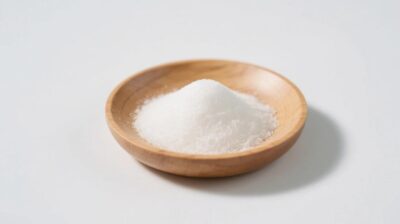
Organic Erythritol Powder
Organic erythritol powder is a certified-organic sugar alcohol produced by fermenting organic glucose, delivering…
Polydextrose Powder
Polydextrose powder is a non-GMO soluble fiber with ≥90% total dietary fiber (dry basis)…


