
The Sourcing Challenge for Organic Xylitol
Procurement teams face a distinct set of obstacles when sourcing organic xylitol at commercial scale. Unlike conventional xylitol, which flows through well-established commodity channels, the organic variant demands traceability from field to finished powder — and that traceability narrows the pool of qualified suppliers considerably.
Xylitol is produced through hydrogenation of xylose, a hemicellulose sugar extracted from hardwood or corn cob feedstock. The organic designation means every input — the raw biomass, extraction solvents, hydrogenation catalyst, crystallization aids — must comply with organic processing standards. Any documentation gap at one stage invalidates certification downstream. This cascading compliance requirement is why organic xylitol commands a premium and fewer than a dozen global producers can deliver verifiable organic product at volumes exceeding 500 metric tons per year.
For buyers in food manufacturing, nutraceuticals, and pharmaceutical excipient sourcing, a batch that fails purity thresholds or carries an expired organic certificate can halt a production line and damage brand credibility. The sections below address every dimension of the sourcing decision — from raw material origins to supplier audit protocols — so procurement is built on verified data rather than marketing claims.
Raw Material Sources: Birch vs Corn Cob
Xylitol’s feedstock origin shapes quality, cost, and sustainability. The two dominant sources — birch hardwood and corn cob — present trade-offs procurement professionals must weigh against end-market requirements.
Birch-derived xylitol comes from the hemicellulose fraction of birch wood, harvested from Scandinavian and North American managed forests. Birch feedstock is naturally non-GMO, forest management certifications (FSC, PEFC) are widely available, and hardwood fiber produces a cleaner xylose stream with fewer contaminant profiles. The downside is cost — birch is more expensive per unit of recoverable xylose, and supply volumes are constrained by seasonal logging cycles.
Corn cob-derived xylitol utilizes agricultural residue from corn processing, predominantly from China’s corn belt and the American Midwest. Corn cobs offer higher xylose yield per ton of raw material, translating to lower production cost. However, the organic certification path is more complex: the corn must be certified organic, and buyers must verify that no genetically modified corn entered the supply stream. For markets demanding Non-GMO Project Verified status alongside organic, corn cob sourcing requires additional chain-of-custody documentation.
From a sustainability angle, birch supports circular forestry models while corn cob valorizes agricultural waste. Both paths deliver organic xylitol — the deciding factor is which source aligns with your certification stack and cost targets. Suppliers blending sources without disclosure represent a risk category covered later.
Understanding the Certification Stack
Organic xylitol procurement involves a certification stack — multiple overlapping standards addressing different compliance dimensions. Understanding what each requires, and what it does not, prevents costly assumptions.
| Certification | Governing Standard | Key Requirements | Scope Limitation |
|---|---|---|---|
| USDA Organic | NOP 7 CFR Part 205 | Organic feedstock; approved processing aids; annual on-site audit; organic system plan | Does not address GMO status separately; does not cover Kosher/Halal |
| EU Organic | Reg 2018/848 | Organic farming origin; approved processing inputs; traceability through all handlers; EU-accredited certifier | Specific to EU market entry; not equivalent to USDA NOP without dual certification |
| Non-GMO Project Verified | Non-GMO Project Standard | No GMO inputs at any stage; ongoing testing protocol; supply chain segregation | Does not certify organic farming practices |
| Kosher | OU/OK/Star-K protocols | No animal-derived inputs; approved processing equipment; rabbinic supervision | Does not certify organic or GMO status |
| Halal | IFANCA/Halal Food Council | No non-Halal contaminants; approved processing aids; Islamic supervision | Does not certify organic or GMO status |
The critical procurement insight is that no single certification covers all dimensions. A supplier holding USDA Organic certification alone cannot guarantee Non-GMO Project Verified status, and vice versa. For products targeting both North American and European markets, dual organic certification (USDA NOP plus EU 2018/848) is essential — each regime maintains its own approved-input lists, audit schedules, and enforcement mechanisms.
When evaluating a supplier’s certification portfolio, request the actual certificate documents — not scanned thumbnails, but current certificates with valid expiry dates, certifier accreditation numbers, and the specific product scope listed. A certificate for “organic fruit processing” does not cover organic xylitol production. Scope specificity matters.
Purity Grade System and Key Specifications
Xylitol is traded in two primary purity grades: food grade and pharmaceutical grade. The distinction matters because specifications diverge at several parameters, and mislabeled grade claims create regulatory exposure.
Food-grade organic xylitol — the grade used in confectionery, baking applications, and tabletop sweeteners — must meet the specifications below. Pharmaceutical-grade xylitol (used as an excipient in drug formulations) carries tighter residual solvent limits and additional monograph requirements under USP or Ph. Eur., but the core physical and microbiological parameters remain consistent.
BIOSTARCH Organic Xylitol — Full Specification Table
| Parameter | Specification | Test Method |
|---|---|---|
| Purity (Xylitol content) | ≥99.5% | HPLC |
| Moisture | ≤0.5% | Karl Fischer titration |
| pH (10% solution) | 5.0–7.0 | Potentiometric |
| Specific Rotation | 0° (optically inactive) | Polarimetry |
| Residual Xylose | ≤0.5% | HPLC |
| Lead (Pb) | ≤0.1 mg/kg | ICP-MS |
| Arsenic (As) | ≤0.1 mg/kg | ICP-MS |
| Cadmium (Cd) | ≤0.05 mg/kg | ICP-MS |
| Mercury (Hg) | ≤0.01 mg/kg | ICP-MS |
| Nickel (Ni) | ≤1 mg/kg | ICP-MS |
| Total Plate Count (TPC) | ≤1,000 CFU/g | ISO 4833-1 |
| Yeast & Mold | ≤100 CFU/g | ISO 21527-2 |
| E. coli | Absent/10g | ISO 16649-2 |
| Salmonella | Absent/25g | ISO 6579-1 |
| Listeria | Absent/25g | ISO 11290-1 |
| Certifications | USDA Organic, EU Organic, Non-GMO Project Verified, Kosher, Halal, GRAS | — |
The purity threshold of ≥99.5% is the minimum for commercial organic xylitol. Top-tier producers achieve ≥99.8%, and contracts should specify the actual target rather than relying on a minimum threshold. Moisture directly affects flowability and shelf stability — levels above 0.5% increase caking risk and shorten functional shelf life.
Heavy metal limits reflect CODEX and EU Commission Regulation thresholds. For organic xylitol used in health-focused formulations, trace heavy metal carryover is a reputational liability, and buyers should prioritize suppliers whose results fall well below maximum permitted levels.
How to Evaluate a Certificate of Analysis
A Certificate of Analysis (CoA) accompanies each production batch, yet formats vary widely and not every CoA provides sufficient depth. Here is a structured evaluation approach.
First, verify identity and traceability. The CoA must include a unique batch or lot number, the production date, and the specific product designation (organic xylitol, stated purity grade). A CoA that lists only “xylitol powder” without grade, purity target, or organic status is insufficient.
Second, check completeness. Every parameter in the specification table should appear with an actual numerical result — not “Pass” or “Compliant” as a blanket statement. A CoA that omits heavy metals, lists microbiology as “meets specification” without colony counts, or skips specific rotation raises questions about testing rigor.
Third, confirm the testing laboratory’s accreditation. In-house lab results are acceptable only if the lab holds ISO 17025 accreditation for the specific test methods cited. Independent third-party results carry more weight for microbiology and heavy metals. Request the lab’s accreditation certificate and verify the scope covers the analytical methods used.
Fourth, compare results against thresholds. A batch reporting Pb at 0.09 mg/kg technically passes ≤0.1, but proximity to the limit suggests inconsistent feedstock or a process control issue. For products marketed for oral health, marginal heavy metal results are a sourcing red flag.
Fifth, check date alignment. The CoA issue date should correspond to the batch production date within a two-to-four-week testing window. A CoA issued months after production, or dated before the production date it references, indicates a data integrity problem.
Supplier Audit Checklist
Beyond CoA review, a structured supplier audit is the foundation of long-term sourcing confidence. The checklist below covers essential evaluation points.
| Audit Dimension | What to Verify | Red Flag If Missing |
|---|---|---|
| ISO 22000 / FSSC 22000 | Current certificate; scope includes xylitol production; no major non-conformances in latest audit report | Only ISO 9001 without food-safety-specific certification |
| HACCP Plan | Documented hazard analysis for xylitol; CCPs identified for heavy metals, microbiology, residual solvents | Generic HACCP template not tailored to xylitol process |
| Organic Certificate | Current USDA NOP and/or EU 2018/848 certificate; scope lists organic xylitol; certifier is accredited | Certificate expired or scope does not name xylitol |
| Non-GMO Verification | Current Non-GMO Project certificate or equivalent; ongoing testing protocol documented | Claims “naturally non-GMO” without formal verification |
| Lab Accreditation | ISO 17025 certificate for in-house lab; scope covers relevant test methods; or named third-party lab with accreditation | All testing attributed to unnamed “partner lab” |
| Traceability System | Batch-level traceability from raw material receipt through finished product; documented chain of custody for organic feedstock | Cannot trace specific batch to specific raw material lot |
| Complaint & Recall Procedure | Documented customer complaint handling; recall procedure with defined triggers and notification timelines | No written recall procedure or no record of past complaints processed |
| Pest Control & Facility Hygiene | Pest control contract; facility cleaning schedule; environmental monitoring results | No pest control documentation; no environmental monitoring program |
For first-time suppliers, request the last two years of third-party audit reports — not just the compliance certificate, but actual findings. Minor non-conformances are normal; how the supplier corrected them reveals operational maturity. Major non-conformances in food safety systems are disqualifying until resolved.
Suppliers producing xylitol for both food and industrial applications should demonstrate physical or temporal segregation between production lines. Cross-contamination risk between food-grade and non-food-grade processing is a regulatory violation in most jurisdictions.
Packaging and Storage for Bulk Import
Organic xylitol ships in 25 kg multi-wall paper bags with an inner polyethylene (PE) liner. The PE liner creates a moisture barrier and prevents direct contact between product and the outer paper layer, avoiding particulate contamination.
Storage conditions directly affect product integrity over the shelf life window. Xylitol is hygroscopic — it absorbs moisture from the environment, and once moisture content exceeds 0.5%, caking and crystallization changes begin. The recommended storage parameters are:
- Temperature: below 25°C, with no exposure to direct sunlight or radiant heat sources
- Relative humidity: below 65%, achieved through climate-controlled warehousing or desiccant systems for smaller volumes
- Stack height: no more than eight bags per pallet to prevent compression damage to lower bags
- Shelf life: 24 months from production date when stored within specified conditions; monitor moisture at the 18-month mark for bulk inventory
For bulk import via ocean freight, container humidity can spike above 80% during tropical routing, and temperature cycling accelerates moisture ingress through bag seams. Procurement contracts should specify container ventilation requirements or require moisture-barrier packaging for maritime shipments.
Inventory rotation follows FIFO protocol, but organic product requires additional documentation: each pallet must carry a traceable lot number, and the receiving warehouse must log the lot against the corresponding CoA. This record is the organic chain-of-custody link that certifiers audit. Organic and conventional xylitol must be stored in segregated zones with clear labeling to prevent cross-contamination claims.
Red Flags When Sourcing
Not every supplier claiming organic xylitol capability can substantiate it. These red flags should trigger additional verification or supplier replacement.
Undeclared or blended source material. A supplier that does not specify whether its xylitol is birch-derived or corn cob-derived is obscuring a sourcing decision that affects organic traceability and GMO risk. Organic certification requires documented feedstock origin, and undisclosed source blending is one of the supplier risks covered in our xylitol comparison guide.
Missing or incomplete Certificate of Analysis. A CoA lacking batch numbers, omitting heavy metal results, using pass/fail without numerical values, or unable to name the testing lab is not a reliable quality record. Request a complete CoA before contract negotiation.
No organic chain-of-custody documentation. Organic certification is a chain that begins at the farm or forest and extends through every processing step. A supplier with an organic certificate for its facility but no organic certificates from its raw material providers is breaking the chain. Certifiers audit end-to-end, and any gap invalidates the downstream claim.
Certificate expiry dates not monitored. Organic certificates have defined validity periods, typically one to two years, with annual surveillance audits. A supplier whose organic certificate has expired — or is within 90 days of expiry without a renewal in process — should be placed on procurement hold until renewal is confirmed.
Inconsistent specification results across batches. CoA data showing wide swings in purity, moisture, or heavy metal levels across consecutive batches signals inadequate process control. Organic xylitol production should deliver consistent results within narrow bands; variability indicates raw material inconsistency or insufficient in-process monitoring.
Price significantly below market average. Organic xylitol has a defined cost floor driven by organic feedstock premiums, certification expenses, and compliant processing. A price 20–30% below market suggests non-organic product labeled as organic, specification shortfalls, or unsustainable margin compression that will eventually cause supply or quality failures.
About Our Organic Xylitol
BIOSTARCH organic xylitol is produced from certified organic feedstock under a full certification stack — USDA Organic, EU Organic, Non-GMO Project Verified, Kosher, and Halal — with complete chain-of-custody documentation from raw material through finished powder. Every production batch is accompanied by a detailed Certificate of Analysis covering purity (≥99.5%), heavy metals, microbiology, and physical parameters, tested by ISO 17025-accredited laboratories.
The product ships in 25 kg paper bags with PE inner liner, stored and transported under controlled humidity and temperature conditions to preserve the ≤0.5% moisture specification throughout its 24-month shelf life. BIOSTARCH maintains batch-level traceability from the organic forest or farm origin to the final packaged lot, enabling full regulatory audit readiness for any market requiring organic compliance verification.
For procurement teams seeking a verified organic xylitol supply that meets food-grade and pharma-adjacent specifications without certification gaps, BIOSTARCH offers the documentation depth, consistency, and supply reliability that commodity-only suppliers cannot match. Explore the full product specification and request a CoA sample to evaluate whether BIOSTARCH organic xylitol aligns with your sourcing requirements.
Recommended Products
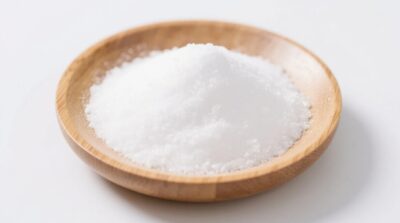
Organic Xylitol
Organic xylitol is a certified-organic sugar alcohol from non-GMO plant fiber. With about 40%…